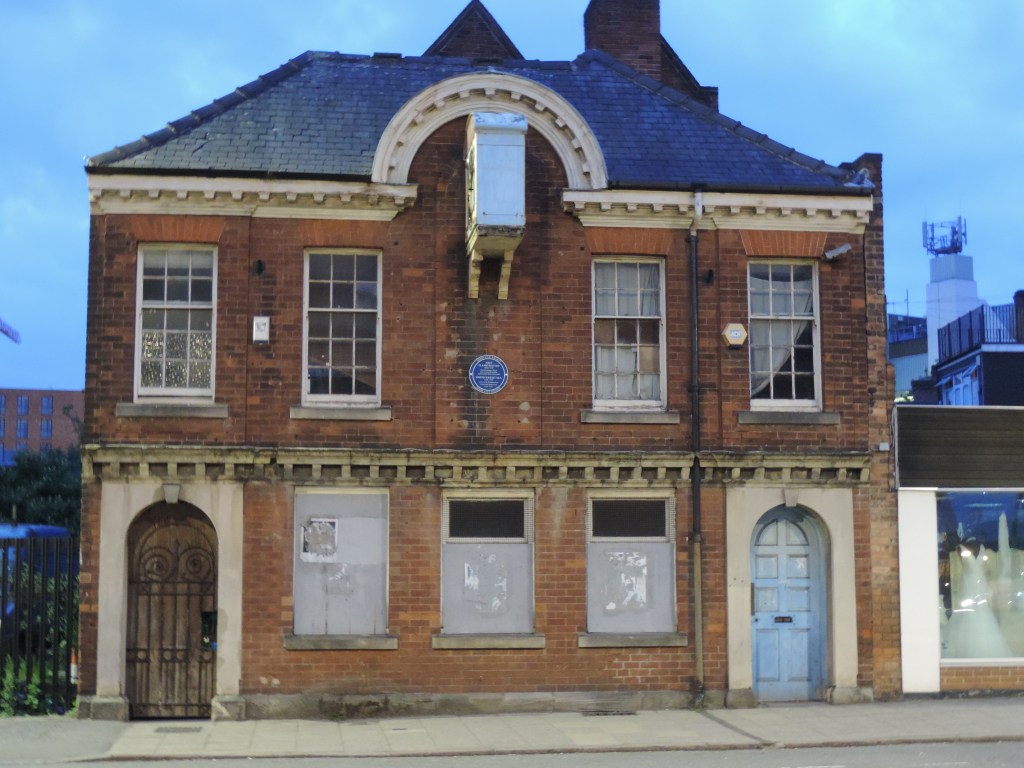
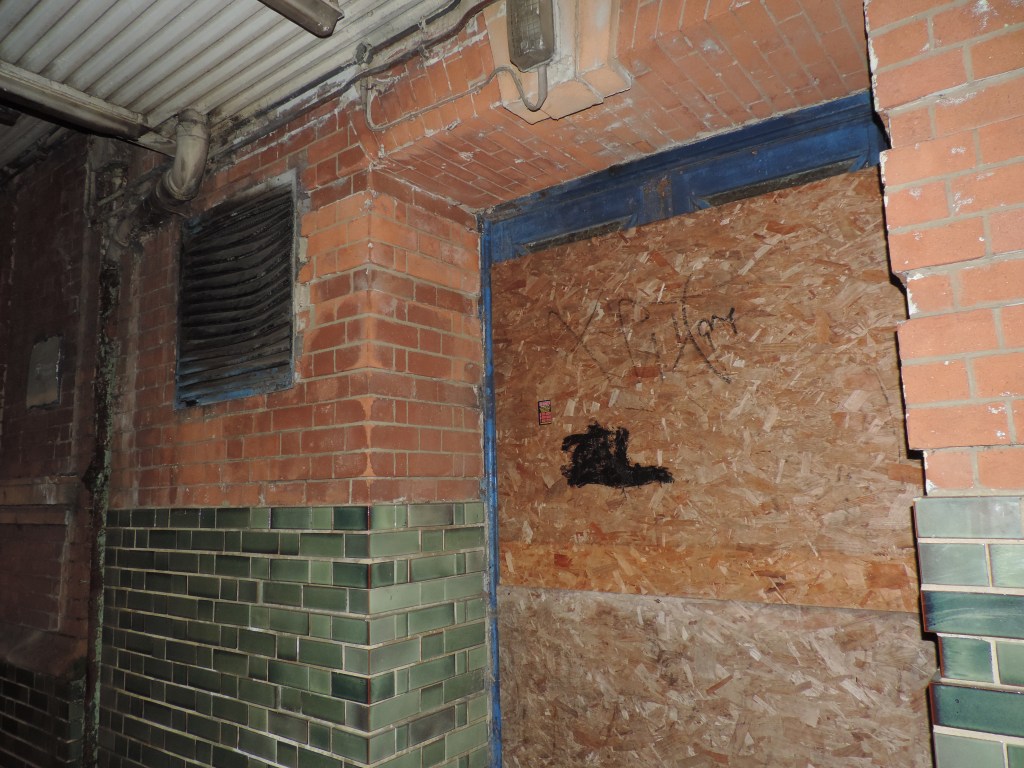
The Breakdown of the City of Derby: and the Citizen’s Response to the Disused, Urban Spaces

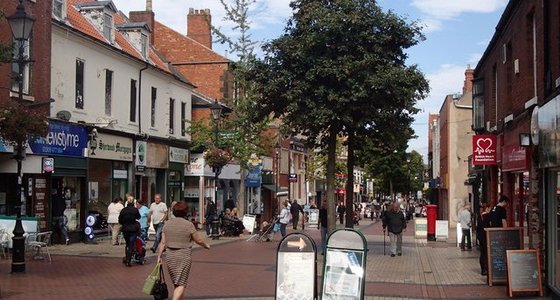
This blog will focus on derelict buildings and empty shops on the high street in the city centre and it’s outskirts of Derby. Ruined, deserted buildings such as the ‘Assembly Rooms’ and the ‘Hippodrome’ which were previously cultured venues but are now nothing but ruins. The walk will also investigate how the citizens utilise the disused, empty urban spaces.

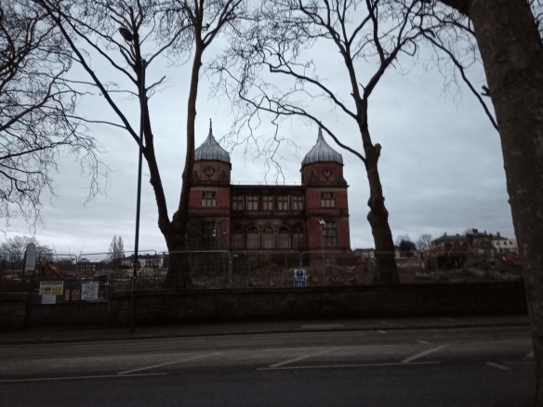
Uttoxeter New Road was the beginning of my walk, strolling past the derelict factory decorated with unappreciated arts. I walk on Mercian Way Road heading towards the London Road Community Hospital. Which remains a rugged Victorian architectural building with hot pepper roofs. The two ancient, lonesome buildings offer gothic characteristics which is captivating to the human eye. The two buildings lure me in to appreciate subtle details the former hospital possess. Whilst it’s surroundings in dust and rocks from the demolition of other parts of the hospital. Walking on London Road is the equivalent to travelling back into time to observe what urban life was like previously. Such urban spaces is a comparison to an elaborate museum as Lefebvre (19698) would describe it as. Proceeding to observe my current surroundings and observing the historical buildings, I notice a father and his juvenile son appreciate the former hospital across the road as they exit an occasional event. The modern cars parked outside the former, outdated hospital premises portrays a juxtaposition between the past and the present. Exiting London Road onto a smaller, quieter street approaching towards the Intu Shopping Centre. There was not many pedestrians walking by or across the dual-carriage way outside the shopping centre.

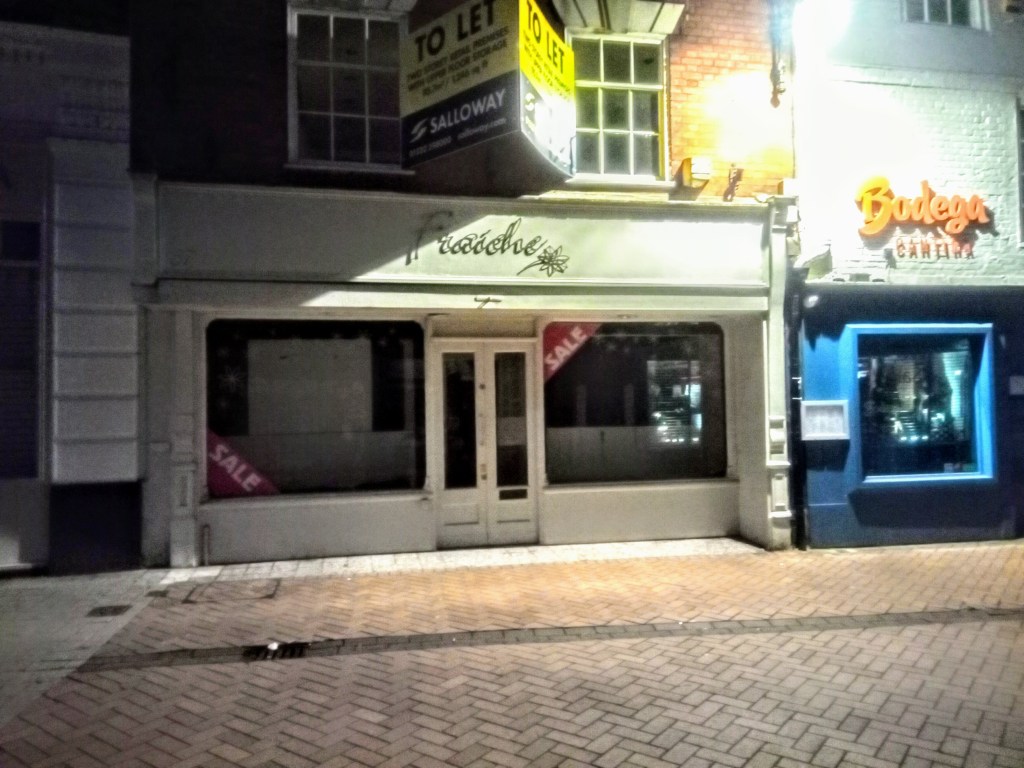
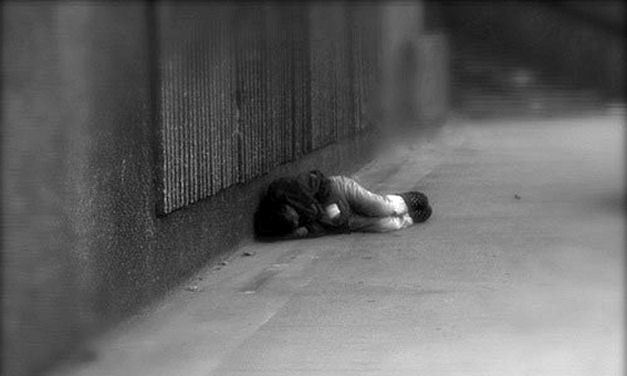
Approaching the city centre and passing by multiple shops, I had noticed many of them were empty or covered in ‘CLOSING DOWN’ and/ or ‘SALE’ signs. The closed dessert shop on London Road was boarded up, the assumption that came to mind was to prevent squatting and how the city is planned to disadvantage the homeless, Watson (2009). The poor congregate outside the shop’s entrances that provide limited shelter and cocoon themselves into tired quilts and blankets.

Walking through the Corn Market Street, I observed the abandoned venue which is located in the city centre and is known as the Assembly Rooms. The building is dull, dark and lacks character which was rebuilt in 1977. The surrounding area of the damaged property is deserted and is ignored by walking passengers. Thus modern cities require creative populations according to Landry (1978). After spending a few moments observing the former cultural venue, I approached to the Sadler Gate high street, looking above shop windows. I had noticed that a lot of the buildings were constructed in the Georgian and Victorian era. Although, walking down a narrow, short high street, many of the stores and buildings were empty, or closing down. A homeless man sits outside a shop looking at every passenger that could possibly give him food or spare change. Seeing such struggle from another individual had made me felt grief and upset. The destitute man utilised the space to help him find the funds in order to survive another night.

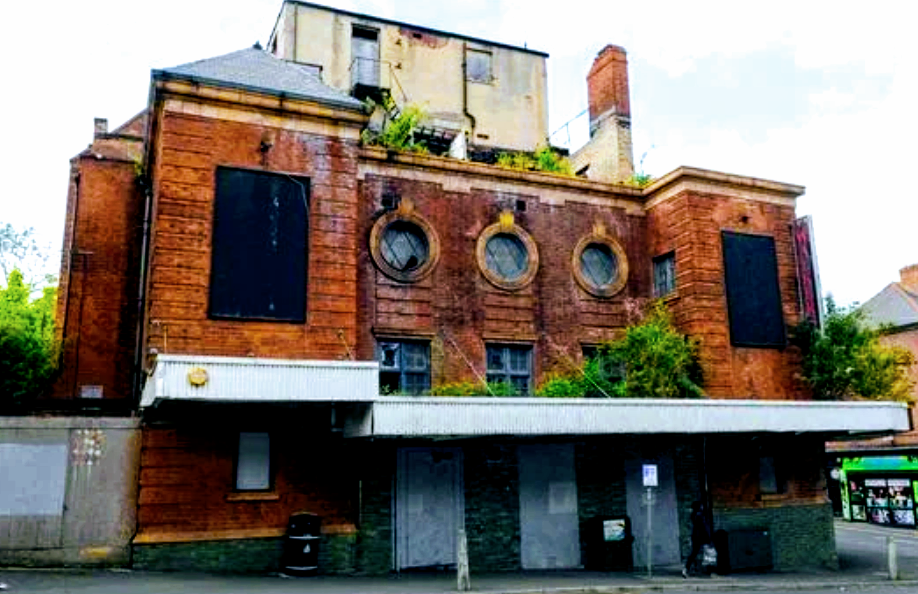
As I walked past the derelict performance venue, the Hippodrome, which was also previously a Bingo hall before an incident of fire. The “undesirables” lingered around the building , sitting outside the boarded up main entrance. A disused area which is consumed by the homeless and the unemployed, a social space that they could call their own. The surrounding areas around the Hippodrome makes me encounter the feeling of uneasiness and intimidation. As individuals deemed as ‘delinquents’ congregate this particular location. Two men shouted me for my attention, however, I proceeded to walk and avoid interaction.  Heading towards the end of my urban walk, I walk back to the ruined, disused factory on Uttoxeter New Road. The walls covered with unappreciated arts which is often shunned at, as it is considered to be a type of vandalism. Moreover, the locals are utilising the old factory’s walls to accommodate their hobbies, Lefebvre (1968) explains that urban environments deliver pleasure to it’ residence and tourists. Creating a transformation to the tired, old building in a non-conventional approach. The premises of where the old factory is located provides an area for the deviant locals to meet and/ or hang around at. Which provides a sense of urban community amongst groups of people. Such unsupervised area invites delinquent actions such as substance abuse and graffiti.
Derby and the COVID-19 Pandemic

I decided to focus this blog on derby during the COVID-19 pandemic. I wanted to experience how the pandemic had affected the way the city functions, and how the night time economy has been affected too, so I went on two walks, one in the daytime and one at night.
My Daytime walk:
Me and my partner started our walk from our house, we live 15 minutes from the city centre so I was curious to see if things had been effected by the government enforced lockdown or if the city was going to be as busy as normal. As we were walking, we immediately noticed how quiet our street was, as its normally busy during the day. We also noticed the rainbow drawings in people’s windows, it put a smile on our faces knowing that people were showing their support for the NHS and key workers during this horrendous time. We started to walk towards Friar Gate. We strolled past the Greyhound Pub which we had spent many a Monday evenings doing the pub quiz, it unearthed feelings of sadness, as much like Stevenson’s theory, every building in a city has an emotional connection to us, it hit me that it might be a very long time until we would be able to enjoy a pint and a trivial quiz again. My partner made a comment that the streets seemed like a ghost town and how airy the city had become. This reminded me of Harvey’s – Right to the City and how the lockdown restrictions haven’t just affected us individually but as a community because to a certain extent our freedom has been taken away. We then made our way to Tesco’s as we needed a few bits. We queued like everyone else, keeping the to the two-metre distancing rule. I thought to myself how strange it was, I had never had to queue to get inside a supermarket before and I wondered how long all this would last. This reminded me of Sharon Zukin’s theory and that COVID-19 has and may in the future still, changed our culture and how we operate within the community. Me and my partner wanted to get what we needed and get out as quickly as possible. Within 20 mins we were out and, on our way, back home. It wasn’t long until we found ourselves back home, we got in and washed our hands straight away, we then had a conversation reflecting on everything that was going on at the moment and how things had changed.

My Night time walk:

On our night time walk, my partner and I decided to walk to Markeaton Park. I wondered if people were behaving differently outside of the city centre as it is a less crowded area. The vibe of the streets was completely different at night, it was even more of a ghost town and it was extremely creepy. There were a few people jogging and walking home from work as we walked towards the busy road next to the park. As we approached the busy A road, we made a conscious decision not to press the crossing buttons, therefore, we had to cross without the assistance of the traffic lights, which surprisingly was very easy as the road wasn’t as busy as it usually was. As we crossed the A road I found that we were getting judgmental looks from the drivers, I wondered if it was because they thought that their reasons for travelling were more important than ours, which they probably were, however, everyone is allowed out one time for a form of exercise. My partner mentioned that they may not be judgmental looks, but looks of some sort of validation? They were looks as if to say ‘if they’re outside the house and enjoying a walk then it’s okay if I go out too’. We also noticed that the McDonalds sign wasn’t lit, I had never seen one not lit up before so it was really strange to see. Once we had crossed the road, we approached the entrance of the park, it was pitch-black and spooky, I felt nervous and it was very anxiety provoking.  I thought to myself that if I was on my own, I would not have chosen to walk through the park at night. However, as I was with my partner, I felt safer. This reminded me of Barbara Schmucki’s article ‘if I walked on my own at night, I stuck to well-lit areas’, as walking around at night is very different emotionally for females as it is for men, as there’s a sense of vulnerability for women at night. Once I was home I only recalled seeing four people. Overall, it was really relaxing, just what I needed with everything going off as ive been quite anxious and unsettled since the COVID-19 lockdown.
To conclude my walks made me realise how real this pandemic is and how much the way in which we live our lives have changed and may still change in the future, and also how it has changed our economy and how we use urban spaces.

Me, my Nana and Derby

The starting point for my walk was a video that is 75 years old. It is a short campaign video made by the Labour Party in 1945 that shows my great Nana, Violet Wilson, talking about how she lives and how she wishes to live. She mentions wanting a two water taps instead of her current one and also that she would like an indoor toilet in an ideal world. The video is about housing and her house in particular. But it got me to thinking about how we both inhabited the same space, namely the city of Derby (although it was a town then) and how we both saw and experienced the same city.

Image result for city of derby sign
Derby City Welcome Sign

I started the walk not really knowing where I wanted to go or what I was going to encounter. As we walked along The Strand my fellow ramblers started taking pictures of statues and buildings for their own blog. Then it came to me, how did my great Nana see the same spaces when she walked through Derby 75 Years ago? This was my new lens for seeing things as we walked.  

It quickly became apparent that many of the spaces she would have seen are now abandoned or repurposed. I walked along The Strand and saw buildings that showed evidence of their former life. The Post Office and the Gas Light and Coke Company building on Friar Gate are more generous with their origins as their names are etched in the masonry. I wondered if Violet had ever entered the buildings to send letters or needed to enquire about her gas supply. And, what she would think of the excessive drinking and partying I had done in my youth in the same buildings as they have more recently been occupied by nightclubs and bars.

We moved onto Victoria street where the old Debenhams/ Ranbys building is located (I know it as Debenhams, but Violet would have also known it as Ranbys) This has always been a landmark in Derby City Centre but has fallen into disrepair in recent years due to the arrival of the Intu Centre. My great grandmother would have actually remembered the old Ranbys store that stood on the site until the 1960’s when this new art deco style building was built. I could imagine her going to see her daughter (my Nana) on her lunch break when she worked in Ranbys in the early 1960’s. If she was anything like my Nana, and I think she was, she would have been outraged by the state of the store now and the apparent imminent demolition of the site.

At this point in our walk we went to see some places my fellow ramblers were interested in such as the waterfall (no longer working) on the market place and the mechanised (no longer working) Albion Street Clock. Neither of these would have been in place in the Derby my great Nana knew 75 years ago. I reminisced about being told off for running under the Waterfall on shopping trips when I was younger. Part of the reason these elements of Derby are no longer in use is due to the arrival and domination of the Intu centre and the much-reduced footfall in these areas of the city centre. I mentioned the Hippodrome to the rest of my group and none of them knew of it, so I decided to show them. I know it was my Nana’s (Violets daughter) favourite Bingo hall but I wanted to look at it for as the theatre it once was and that my great Nana would have frequented.

We made our way towards the Hippodrome on the corner of Green Lane and Macklin street with me them telling them the little information I knew about it. All were surprised to see the state the building was in. I always knew it was there. I’ve walked past it hundreds of times and hearing stories of my Nana spending hours in there playing the Bingo. I remembered seeing photos in the local paper describing the state the building and its interior were in. I showed my fellow ramblers the images on my phone and we said how cool it could be to go inside and have a look but the boarded doors, windows, chain fences and our own sense of danger told us it was a daft idea. I tried to match the old images with what I could see in front of me. There was an extra layer of façade on the building showing off its days as a bingo hall, but the original entrance could be seen. I know from family stories that my great Nana would have seen shows in the theatre as she loved going to the theatre and cinema.

Derby Hippodrome with its added façade during its life as a bingo hall

With time pressing on, we decided to head towards our rendezvous with our lecturer and other students. This was the old goods warehouse on the wasteland at the bottom of Uttoxeter New Road. This I knew would have been a place my great Nana Violet would have been acquainted as her husband and various other family members worked on the railways in Derby. She will have seen it in its heyday as a working goods yard for the areas train cargo and it will have been of large importance to Derby as a hub for the local economy and transport. Now of course it is derelict and falling into ruin. We walked around the building seeing the path where the old train tracks stretched over towards Friar Gate Bridge. The lower portion of the building is now covered in graffiti, or in my view art. My great Nana would have seen it as graffiti and vandalism, but I think it is giving some beauty and interest to a building and area that is derelict and in ruin.

Graffiti (Art) on the abandoned Train Goods Wear House

These generational attitudes, I think frame how we experience where we live. Much of what is in Derby now, I think, is endearing and different whereas she would maybe think that Derby has gone ‘downhill’ to coin a well-used Derby phrase. This walk made me realise that my family and my family’s history are very much intertwined with the buildings of Derby, even though many of them are now abandoned and awaiting demolition. It also makes me wonder what my children and grandchildren will see and make of the buildings that I am used to. Will they also soon become abandoned and consigned to the annals of history.

Functions of the City

In this short wiki page, I will be investigating the function and importance of city/urban spaces (in relation to) toward human actions in them. What is the role of the city and a role of a man in those spaces, what creates a functionable and dysfunctional city and what kind of impact the city space has on human individuals. In this instance I will focus on Max Weber and European Urban Theory, as well as with Emile Durkheim basic theory of Functionalism. The theorist choice has been made with the interest in the functionality of the city and my own personal observations of those processes.

Max Weber is highlighting couple of important points that are being discussed in European Urban Theory. Weber and Simmel’s were both interested in finding potential solutions for urban spaces and its functionality, Simmel’s argued that to solve existing problems in the city the process of specialization would have to be enforced following the ideas of ‘’neo-Kantian formalism’’. Weber however, following his observation and analytic skills described ‘’the city’’ as a place of ‘’densely settled area of crowded dwellings’’ big enough to describe them as little ‘’colonies’’ where ‘’reciprocal acquaintance’’ is barely possible. Weber then continues that the idea of the city is more complex than just a place with crowded dwellings with different tribes in them, as this would result in neglecting the importance of impersonality and the display of cultural/communal/local identity distinguishing the city from other distinctively different cities and its functions. Weber’s describes his study focus on a form of social behaviourism, as he later claimed that sociology should aim at explaining human development/conduct ‘’in its meaningful dimensions’’ in other words internally not just externally. Weber was able to review each aspect/feature of city functionality, following the ‘’economic, relation of the city to agriculture, political administration, (…) foster and garrison, (…) fusion of fortress and market, (…) social and status concept, (…) military’’ etc. Each of those aspects has been individually tested by Weber through the process of ‘’isolation’’ of each of the factors, this process involved separation and specialization for example; one of the cities were specializing more in agricultural production rather than in more complex political administration of the country, where one city was based around agricultural cultivation (production of food) then other cities were able develop more consumeristic and more comprehensive commercial markets etc.

However, Emile Durkheim argues that the societies or social systems are naturally organic (also referred as organic solidarity) due to establishment of structures of cultural rules that every single member of that group/society must obey. This is also the reference towards the functionality of the institutions in social structures that are being called administrate/government institutions. Durkheim later argue that to retain the function of the society as well as the city, there is a need for ‘’functional prerequisites’’ which are: ‘’reproduction, system of communication and agreed standards of behaviour’’. All these factors from Functionalist perspectives applied in urban or sub-urban setting are the tools to create healthy (organic) society that will lead into greater cohesion in between different communities and will lead into greater prosperity on material and social stance.

My personal perspective about the purpose and the function of the city or urban spaces is quite like Weber’s European Urban Theory as well as the Durkheim Theory of Functionalism that outline the importance of human communities and their contribution into sustainability of their existence in those complex social structures. My personal observation of how city function is similar or more likely to be the same of the idea that for the society to function you have to have a specialized sector of production, distribution and consumption of the goods and services offered by others. The city is a special place of endless opportunities for social interaction and ability for trade with others, who are willing to contribute into the lives of others who are seeking their service to fulfil their needs and desires.

Pockets of history in urban spaces

Viewing Derby as a hollow city, a playground for study. I became familiar with the exterior but not which lies beneath. My walk focused on architecture and its hidden history. Stories shared by colleagues are heard above the traffic at the beginning of the walk at the University of Derby’s copper building. Locals fixate on mobile phones and earphones to drown out the sensory stimuli from the city.

Entering the city through Friar gate road showcases a diversity of culture. Restaurants ranging from English to Bangladeshi and South American cuisine demonstrate the heterogenous population. The homeless walk the streets attempting to converse with strangers who resort to fake phone calls to avoid crossing paths. Ground level consists of services for locals and tourists alike, every corner consists of a new shopping experience. Clearly used by those carrying a multitude of bags.

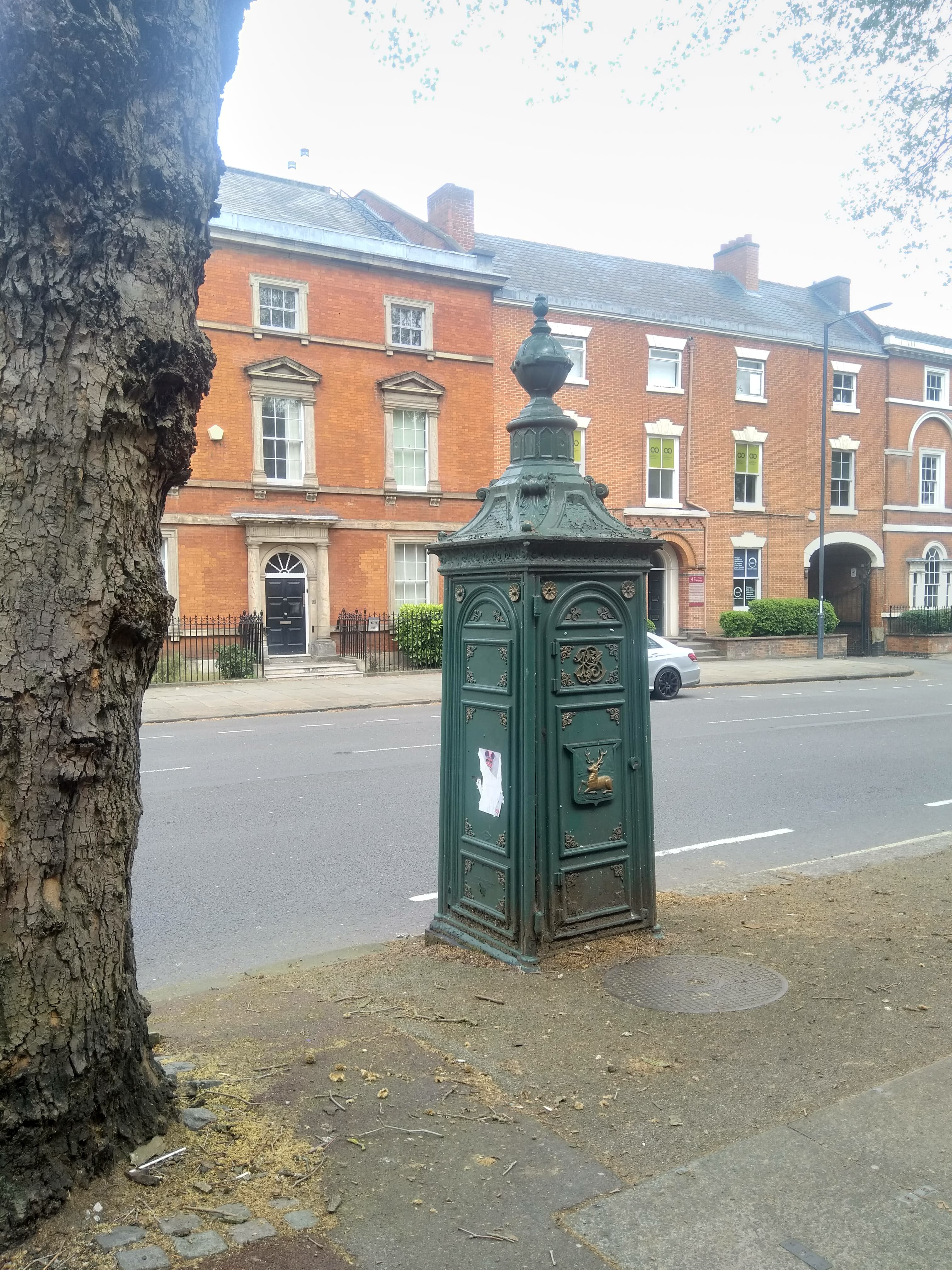
Those crowded streets began to dilute with extension allowing for the audio of frequent phrases to catch my ears. Mentions of the weather and the speech of everyday forgets the history surrounding these individuals. Rounding the corner back towards Friar Gates instils a calm atmosphere after experiencing the rush of the city. The boundary post representing growth, both in area and opportunity. Currently standing at 78.02km² Derby has continued from a trading industry to one of public services.

The old boundary post

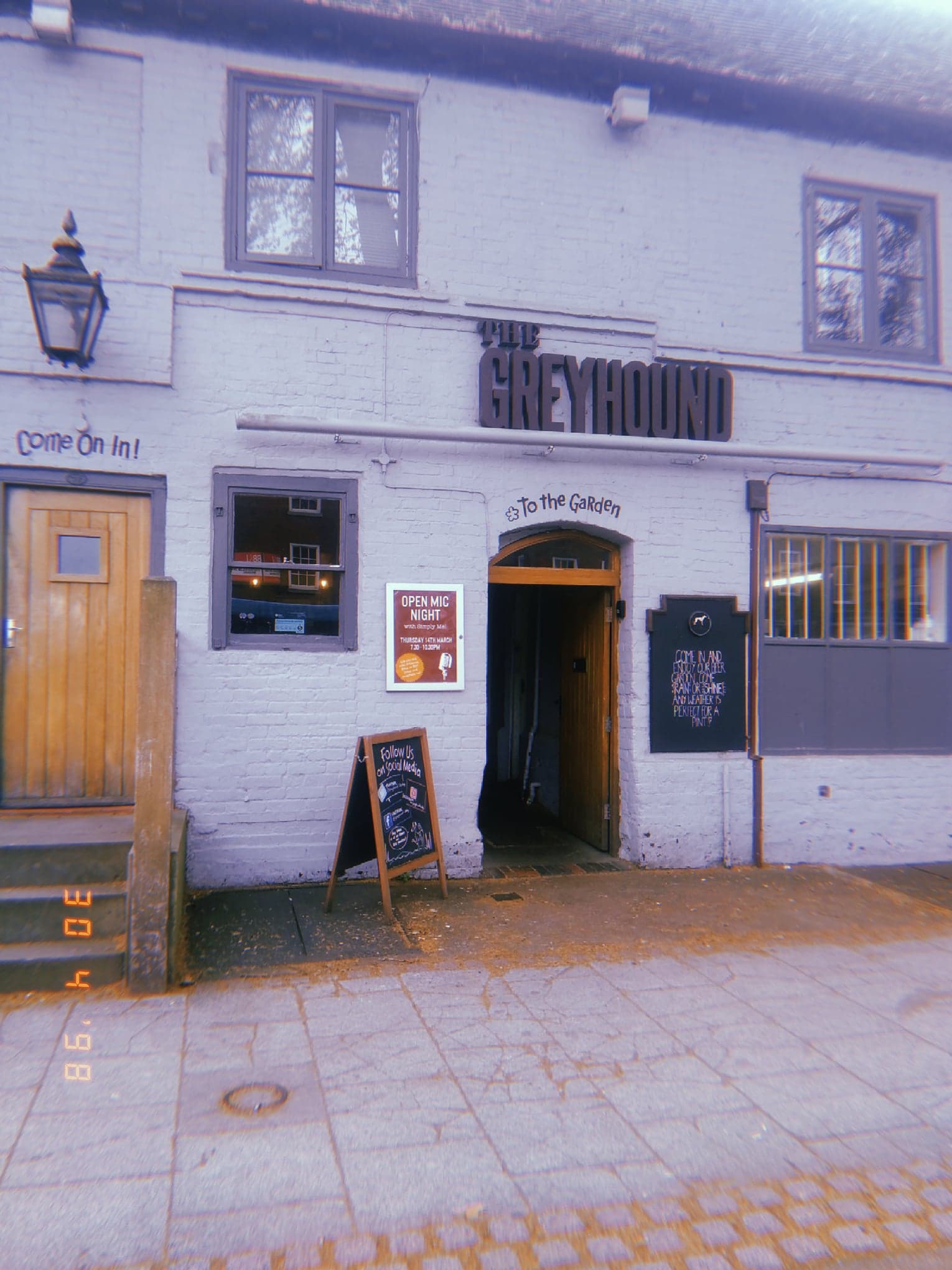
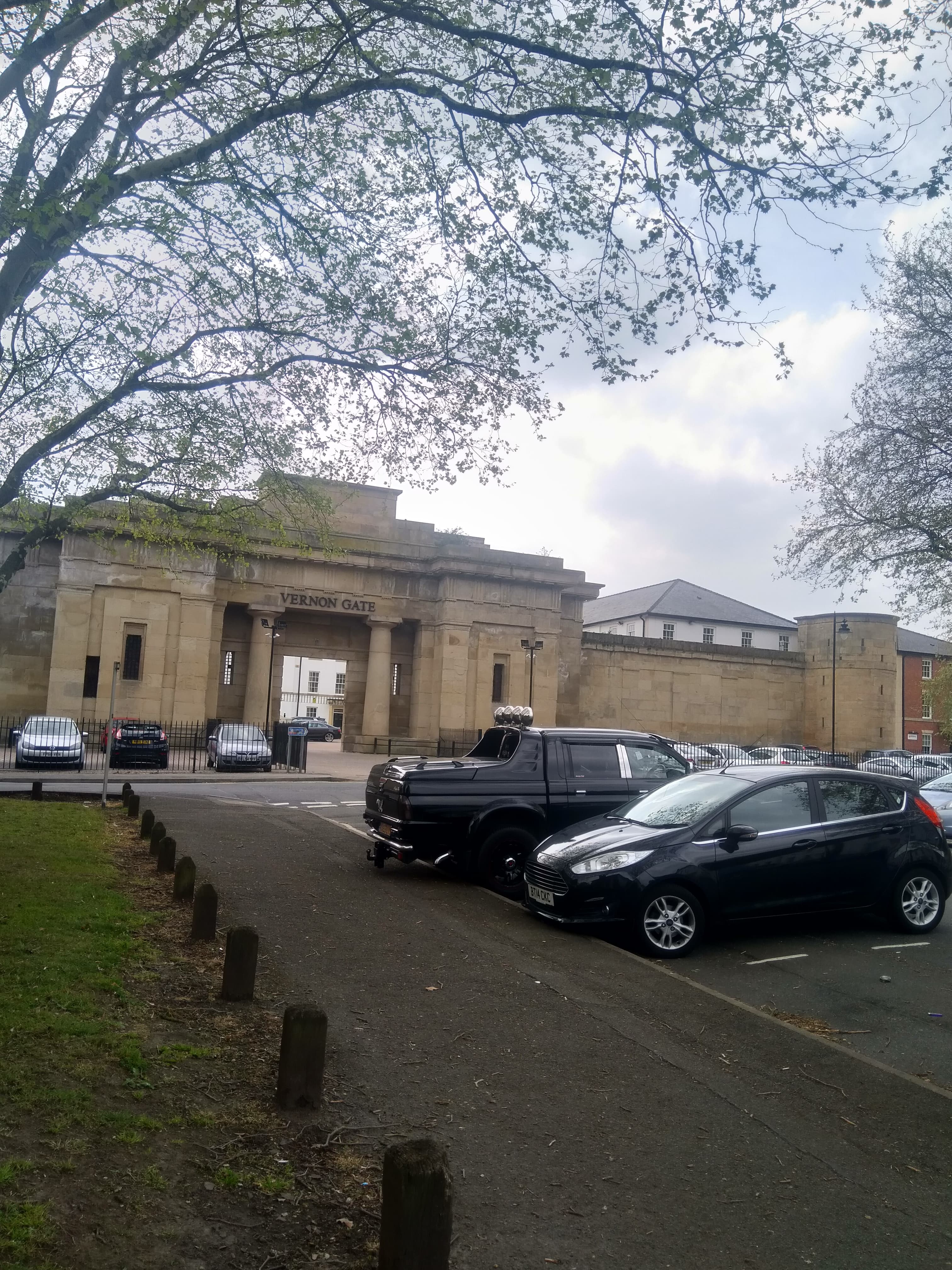
Whilst remaining as one of the last industrial cities it is instead the service economy which is most commonly found. In plain sights stands The Greyhound. Erected in 1734 The Greyhound is a lasting stomping ground for locals and visitors. Hidden beneath the noise pollution lies the verbal exchange of prisoners. Following their last walk to Vernon Gate, prisoners follow a walk passing many architectural significance’s. Structures ignored as they walk towards their grave, the first hanging taking place in 1833-1834 continuing until 1907.

The Greyhound: taken using HUJI app to replicate the vision to that experience in 1999.

Planning application received by the City council in 1990 is evidence of the redevelopment taking place in the area. The front structure of Vernon Gate remains, masking the modern scene behind. Large white constructs hold services ran by modern technology. Dentists and Financial advisers open as usual on a Tuesday afternoon.

Vernon Gate

As we began to retrace the steps towards Friar gate tales of drowned prisoners escaped through pursued lips. This led to me to thought of morality. Is changing the architecture morally acceptable? If we see to literature architecture and urban planning should be construed with public input as spoken by Lefebrve (1996). Our right to the city should allow us to change the environment to suit our needs. Using this incentive, I continued to walk on the same street. Noticing buildings with plaques containing previous occupations. Buildings donated by the church remain in use however, they are now home to modern opportunities. These memories are unheard of by many as they become covered by the need for services. Placing myself in the imagery of the past I began to use apps to recreate aged pictures. Is modern technology replacing architecture and history?

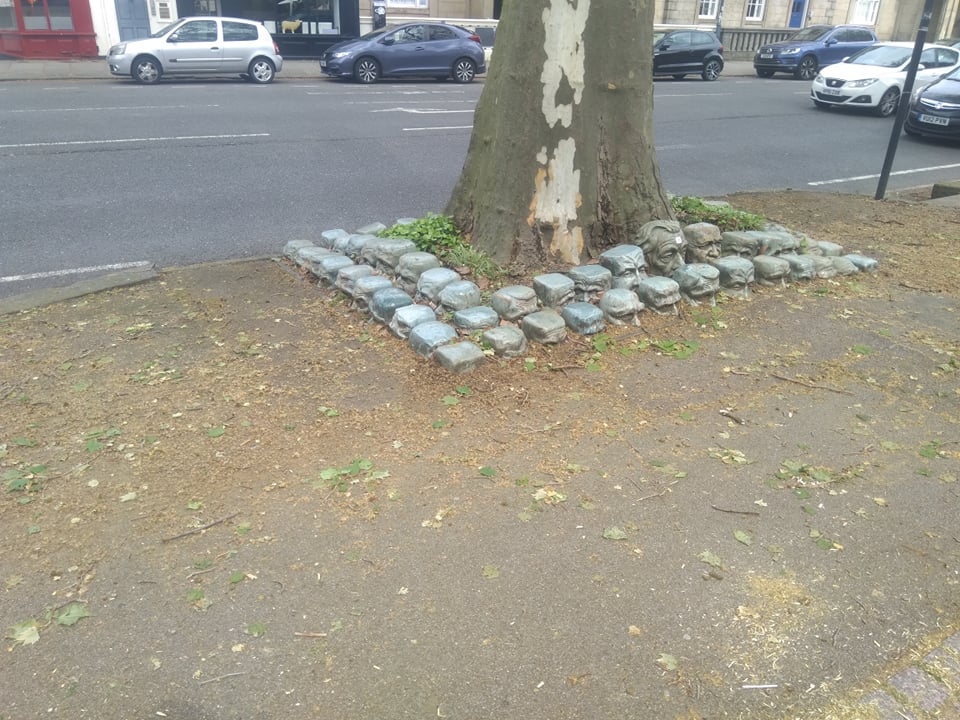
Figure of heads near The Greyhound.

The figure of heads beneath the tree have barcodes to explain the story, however little attention was paid towards them. Despite this history was still present. The bridge no longer used, stands strong above the pedestrians. Architecture which has been officially protected. Friar gate has existed as a conservation area since 1969. An area in need of preservation or enhancement as allocated by Derby city Council. But can we enhance history without displacing from the truth? The relocation of the headless cross would say not.

Is this story unique to Derby and Friar Gate? Since 1976 Derby has a twin town called Osnabrück. Established by the government to generate ideas and innovation emphasis is placed upon the involvement of young people. Derby’s city centre in need of development has been a project of design for some University of Derby students. This involvement in planning can be seen as evidence for our Right to the city.

However, I remain adamant. The walk demonstrated a collage of modern and historical architecture. Historical posts are being used as tourist attractions, where visitors use modern technology to check in and use apps to take disorientated photos of proof. Therefore, is the architecture remaining telling of its history? And can we find true presentations of history in urban spaces?

Crimes Against Beauty: Brutalism in Derby

What is the city? Is it little more than a concrete jungle of bricks and mortar? An architectural ode to days gone by? The feelings of hands that bore it, writ large? How important is the built-up environment that surrounds us? To some, it may seem like background noise to their busy lives. If buildings could speak, what would they say?  

Would the Grade I listed Cathedral of all Saints speak of grandiose gestures, or prayers written in gold and hung upon the walls like a great bastion of those who came before?  

Would the Quad tell tales of the arts? Would it give lectures on the paranormal? Perhaps it wouldn’t say anything at all. Maybe it prefers the silence of the cinema, chewing popcorn and sipping soda in quiet reverence. 

I wonder then, what would a building made in the brutalist design say? Would it recite sonnets of beauty and grace? Certainly not. Would it regale us with tales of an opulent past? Not likely.  

It has been said many times, in many ways, that artists, be they painters, musicians or yes, architects, design with the aim of conjuring up feelings in the eye of the beholder. With this in mind, if Corbusier had intended to stir feelings of nausea and a deep-seated sense of sadness, then I’d say he did an exemplary job. 

Swiss-French architect and facilitator of dubious-to-say-the-least ideas, Le Corbusier, equally loved and despised for his “contributions”, has often been described as the father of modern architecture. His designs can be seen around the world, from Europe to South America, to even Japan. As of 2016, no less than 17 of his buildings were unironically named UNESCO world heritage sites.  

One such structure, the Legislative Assembly in India resembles something only half-finished and then left to rot. It really is a peculiar and sad state of affairs that the exquisite beauty of the Taj Mahal should have to be compared with what appears to be little more than a sad grey block with a bowl of no doubt festering water and mould attached to it.  

Tokyo’s National Museum of Western Art offers its viewers little more than the same form of a sad, grey box, only this time, it’s on stilts. If I were a resident of Tokyo, looking to admire some Western, or art from anywhere ese in the world, I’d certainly be giving this museum of malcontent a wide berth. 

Fortunately for you, dear reader, you don’t have to travel to South America or Japan to sample one of these monuments to misery. No, as luck would have it, there are plenty of Corbusier copycats located right here in our wonderful city of Derby! 

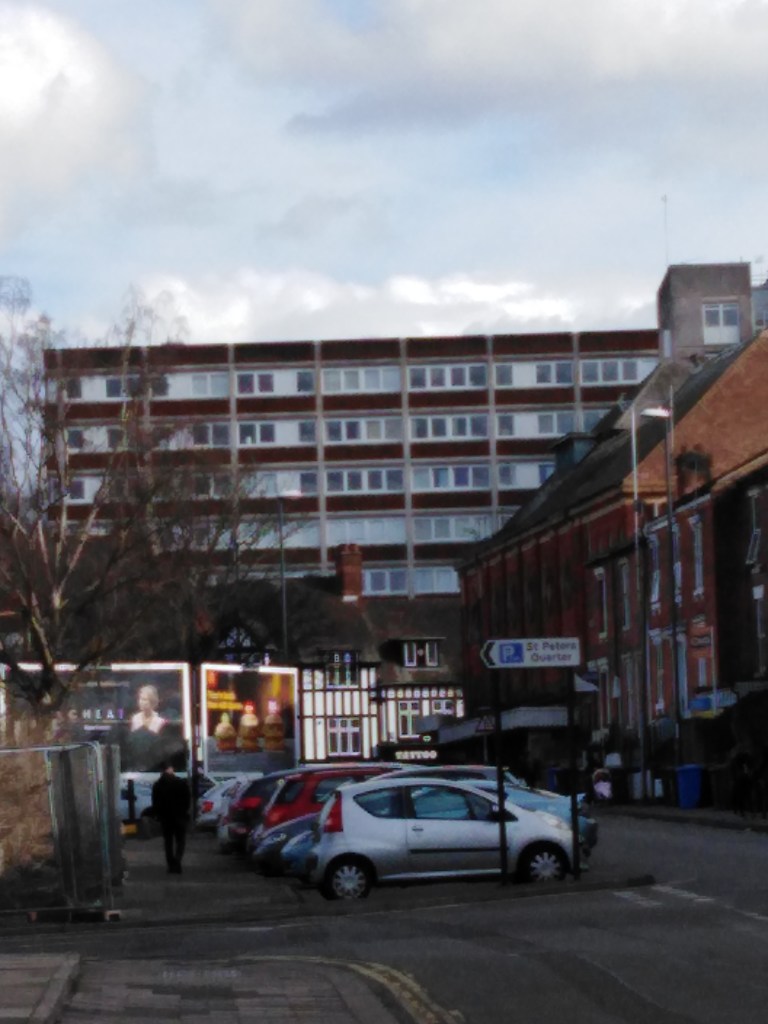
Exhibit A: in the centre ground sits a quaint, mock Tudor house, complete with sash windows and what I think is an attempt at a thatched finish to the roof. Overall, it’s pleasant to look at. Unimposing, you could almost imagine billows of smoke rising from the chimney on a winter’s day. Positioned directly behind it, however, almost stealing the view entirely is a monolith of bricks and mortar, imposing itself unwelcomingly into the frame. Like David and Goliath, the two, juxtaposed, vie for attention. 

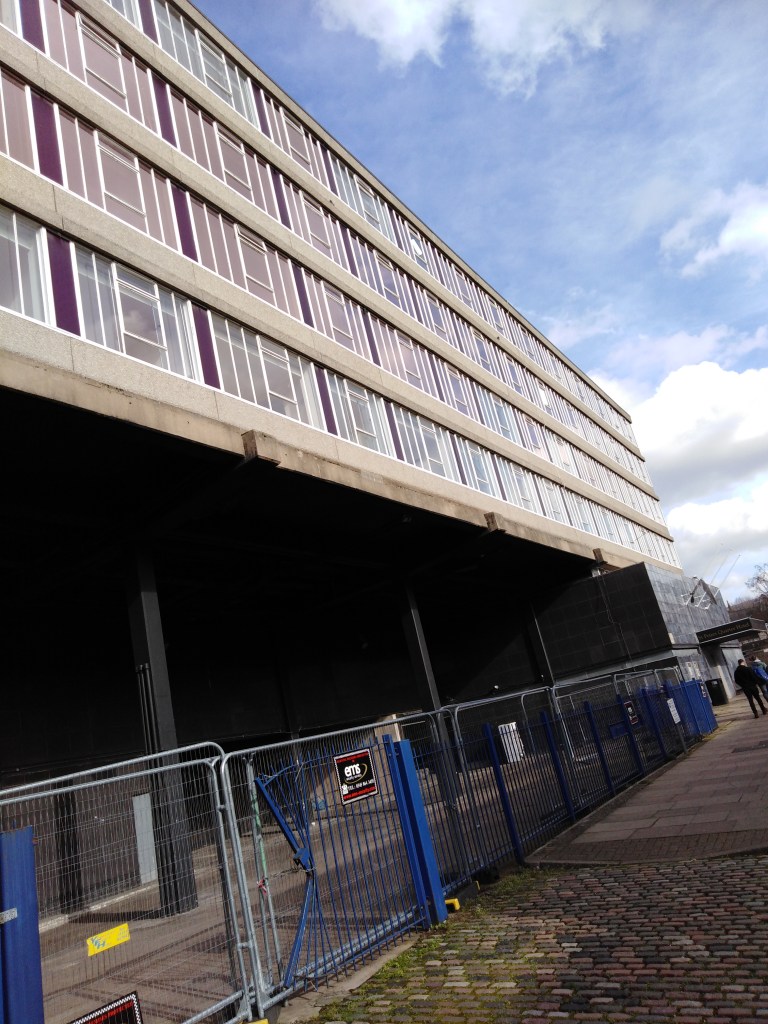
Exhibit B: Yet another block on stilts. Officially closed since 2015, St Peters Quarter Hotel stands on its three legs, dark and brooding. It’s easy to imagine how, even when no longer in use, abandoned buildings could once have been beautiful. Sadly, the claustrophobic view of the little windows, packed tightly together and the strange choice of tiling on the bottom right corner make imagining this rather difficult. 

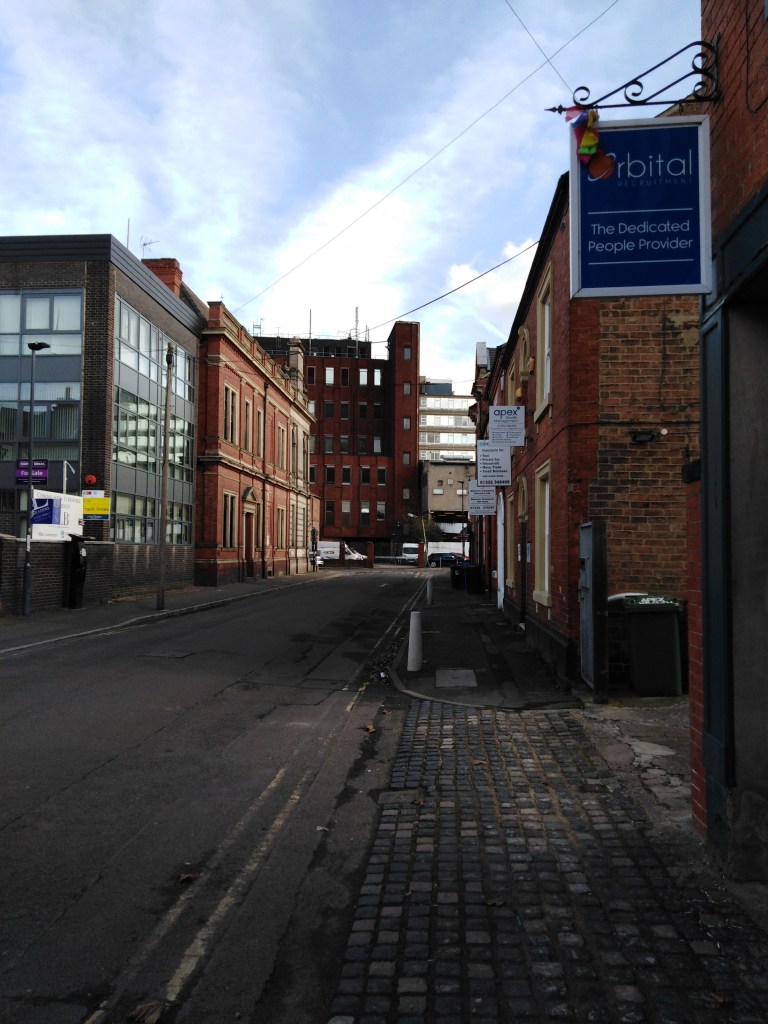
Exhibit C: Lodged snuggly like a thorn between two roses sits another block, but brown in hue, this time. The view of the central library would have made for more preferable viewing, which, ironically, is what would be seen from this angle, were not this curious cube in the way. Still, at the present time of writing, at least there isn’t any mould on it.  

The Perception of Homelessness within Cities

Homelessness within cities is something that has always been an abstract concept to me, and an issue that had little relevance as the first 18 years of my life were lived in a town. My initial years were spent in Worksop, a relatively small town with a population of around 50,000. Whilst walking through the town centre, the feeling is one of a neglectful nature. There are certain parts of the city that are derelict, and this is where many of the homeless reside. However, as aforementioned, this part of town is neglected and is somewhat out the way of the town centre, and therefore, homelessness isn’t an immediate problem within Worksop as they are generally in this area and rarely venture out into the town centre.

Worksop Town Centre

In 2016, I moved to Derby for University and the homelessness within the city limits were not a concern for me. When deciding which university to attend, Derby was in my plans as my perception of the city was a very positive one, even though I had only visited once for the open day and we did not explore the city centre. Upon moving to the city, which has a population of around 248,000, I had an urge to explore this new city and was excited to see what it had in store.

My first perception of the city, when discovering the centre for the first time, was that the city buildings were somewhat archaic and old fashioned. However, they were rather picturesque and interesting to explore. The first negative of the university experience for me was seeing the amount of homeless there were in the city centre. We walked down Iron Gate, the main street in Derby’s city centre, and I witnessed multiple homeless people laying in doorways and sleeping on benches. When I saw these people, there was an overwhelming sense of guilt. This guilt was based on the foundation that I would be going back to an accommodation with heating and food to eat, whilst these people had presumably no shelter and no food or drink.

There was no prior conception that the homelessness rate was this bad in Derby, I heard no information that Derby was increasing in the number of homeless people per year until I moved to Derby and did some research into the subject. I found that in Derby from 2013 to 2014, figures show that the rate of homelessness had tripled within one year. The figures also showed that 769 individuals or families were made homeless within 2014, and this is triple the number of individuals and families that were made homeless within 2013. These statistics are alarming and there definitely should be some action taken to reduce these numbers, however, for people who don’t live in and around Derby, especially around the area I grew up, the perception of Derby for the majority, is that it is a quaint city with historic buildings, which is true, however, the rate of homelessness within Derby should have more awareness.

For many, the higher the rate of homelessness within a city, correlates with the crime rate within a city. There have been several occasions when I have been alone, or with friends and we have witnessed homeless people dealing drugs in the open in the middle of the day. This was in the entrance to the Intu Centre, in the middle of the city centre, in which children and their parents cautiously walked past. On another occasion, we witnessed an assault that happened in a certain part of the city centre in which many of the homeless people reside. Finally, there was a video that circulated online of a homelessness teenager who had taken some illegal substance and was screaming and in a state of hysteria on the floor whilst having to be restrained by law enforcement. There are a many different examples from people who have had negative encounters with homeless people within Derby city centre. This could be a determining factor when it comes to the relocation of a family or an individual, for example when moving to university, and personally, I think the problem of homelessness within Derby needs highlighting and exploring to find possible solutions to make the city a safer community.

Birmingham- The take-over of the modern city

It is impossible to walk around a city without noticing the architecture and how interlinked the city is with other elements of itself. First impressions of Birmingham via Grand Central station you are met with a simplistic interior with a cutting-edge skylight with a swooping balcony overlooking the concourse, this is clearly the welcoming you would expect in Britain’s second capital. The architecture of Grand Central is very modern and inviting yet somewhat clinical with the odd strobe lighting of colour from lights in the ceiling to an otherwise white atrium with stainless silver finishes.

Upon exiting Grand central you are reminded of the futuristic redevelopment of Birmingham as you approach the Selfridges buildings The silver circular domes attached to the exterior of Selfridges belong more to a spaceship than the side of a department store and one must question whether they are trying too hard to prove Birmingham is a contemporary city of the future. Built in 2003 the Bullring attracts 42 millions visitors to this retail hub with high-end designers and superstores all battling for the attention of the shopper. Although the stores are impressive the exterior of the retail complex is unmissable yet unimpressive in the current era of the Burj Khalifa in Dubai and the Shard in London. These domes look somewhat unfitting to their natural environment and the heritage Birmingham has with manufacturing and the car industry. No longer is the city representing the industry it once had but instead represents the future and there is none more obvious than the space domes on the iconic heart of the Bullring. The structure of the Bullring is iconic, yet the magnitude somewhat is unappealing up close and remarkably less impressive than from afar. The 1873 gothic Victorian architecture of St Martin’s Church is perfectly framed between the two shopping centres. The darkness of the dramatic arches and lancet windows among the 4 turrets with cross finials on top is demands far more grandeur than the imposing Bullring, yet is overshadowed by the recent city developments. 

Even a British corporation like Royal Mail is not safe from a rebrand with the selling of the old mail sorting office at the end of Brindley place in 1997. Since then it has had a facelift similar to that of Grand central with white and minimalist clearly ever present in the design plans of the awards winning ‘Associated architects’ company’ who oversaw planning and development up to its opening in 2000. The exterior of the mailbox and overlooking the canals which again tourists enjoy on a summer day the elite and cosmopolitan feel of the city continues with cocktail bars and high-end restaurants which of course have jutting outdoor terraces and bars. The mailbox is certainly a postcard image for that the tourist company’s portrayal for Birmingham but you can help but look at just behind the mailbox whereby dilapidated buildings from the decades previous fall in to ruin. The architecture of those building behind are by far less impressive with high rise worst for wear tower blocs symbolise an era decades before Birmingham’s facelift. 

One area of the city easily accessible yet not enjoyed by all is the “gay village” of Birmingham which is located about a ten-minute walk from the mailbox. As you walk down Smallbrooks Queensway and into the older areas of Birmingham you come across lesser well known clubs which my parents would remember from her time out on the town decades before. Snobs on the corner of Hurst Street has become an institutional right of passage for all 18-year olds in Birmingham. This grand building that once stood is now in some disrepair and painted a matte black in some effort of regaining its image as a destination for party goers however this makes it more evident that snobs is trying to perform to its nearby neigh boughs of Grand Central and the Bullring. Unfortunately, this attempt fails but as a club it is still functional.

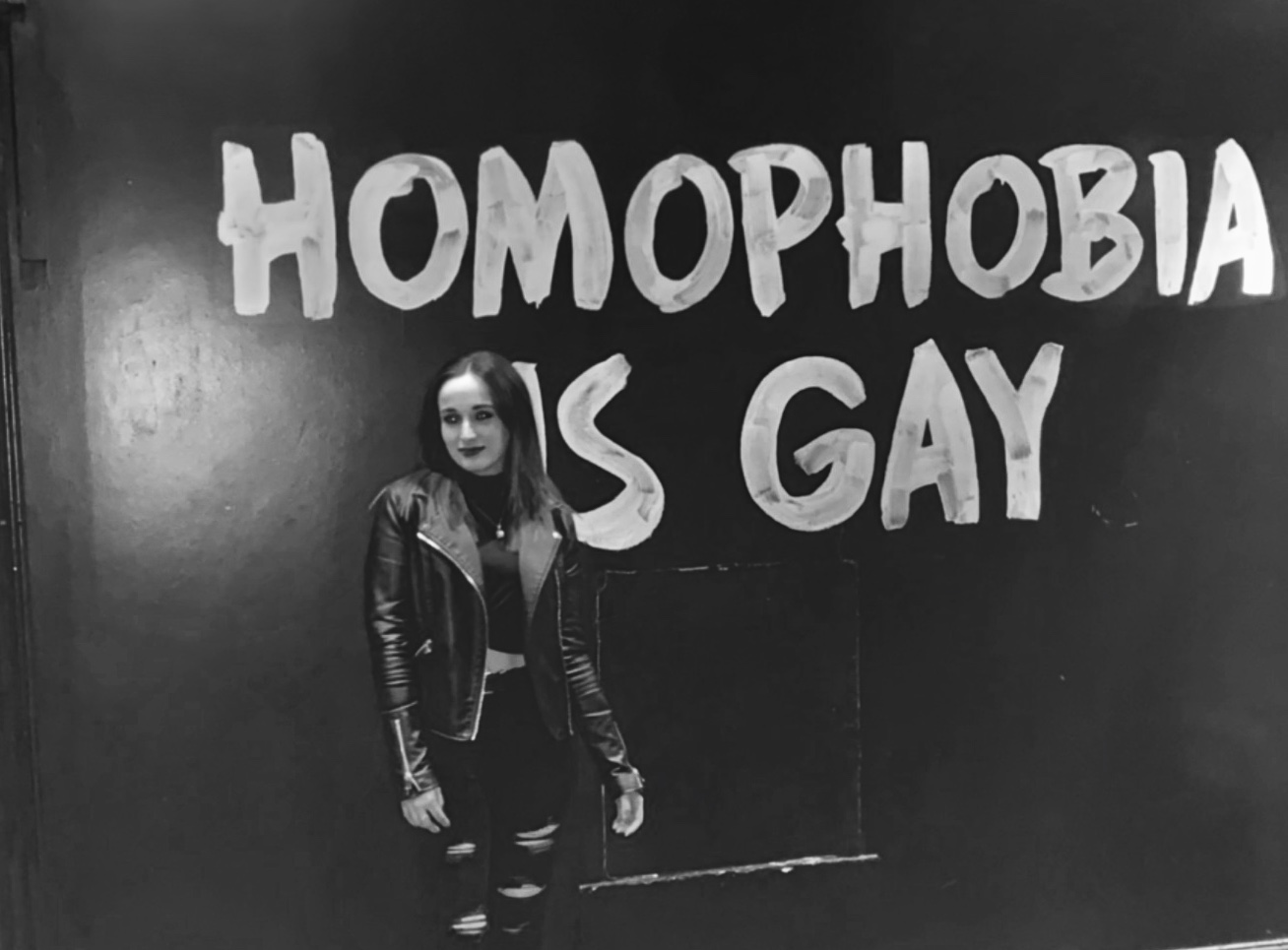
Now in my opinion the best part of Birmingham, the gay village which has not regenerated like much of Birmingham but instead has maintained the façade that has been associated with it for five decades since homosexual relations were delegalized. The vibrant clubs look the total opposite from the exterior which mainly black and dark and sheltered between industrial units which surround the village. Whilst the exteriors of gay village clubs and bars better represent Birmingham past historical lack of investment it is evident the LGBTQ community are paving the way forward with their own artistic design and graffiti in support of their identity and its linkage with the city. Gay village feels far more like the traditional Birmingham one’s parents remember whereby brickwork is still exposed and does not try to perform to a futuristic space like the CBD. Gay villages architecture is far more fitting with the city than the masses of silver and mental which now cascade down the sides of buildings. The splashes of colour of the rainbow flag is a welcome sight from the white and minimalist ideas of the Bullring.  The most infamous clubs of all being Nightingales on Hurst Street at the centre of gay village which not only stands out for its graffiti but also its feeling of inclusivity whether straight, bi, homosexual or otherwise. Much of the graffiti and wall art slogans is not fit for this blog but the most famous display in Nightingales is “Homophobia is gay” is displayed pride and centre in the club. Yes the architecture of the Bullring and New street can be regarded as impressive especially when it first opened but they are also designed without the city in mind and feels very alien and unfitting in comparison to the backdrop of St Martin’s Church or Gay village.

Derby after dark

The ‘urbanization of the human population’ has arguably been increasing over recent decades. For this module, a walk was assigned which triggered a theme I wanted to focus on – places of history that had not been urbanised. During several walks through Derby city centre throughout the day, I was bombarded with a chaotic atmosphere which led me to believe this city was a theatre of social action. This is a scene I have been familiar to, therefore I wanted to delve deeper into another sector of city life. I decided I wanted to take a different approach of the streets and focus on Derby after dark. In particular, I had an aim to discover the darker history of Derby, by being visually transported back in time, to how Derby once was. So I started with the old Derby Jail…

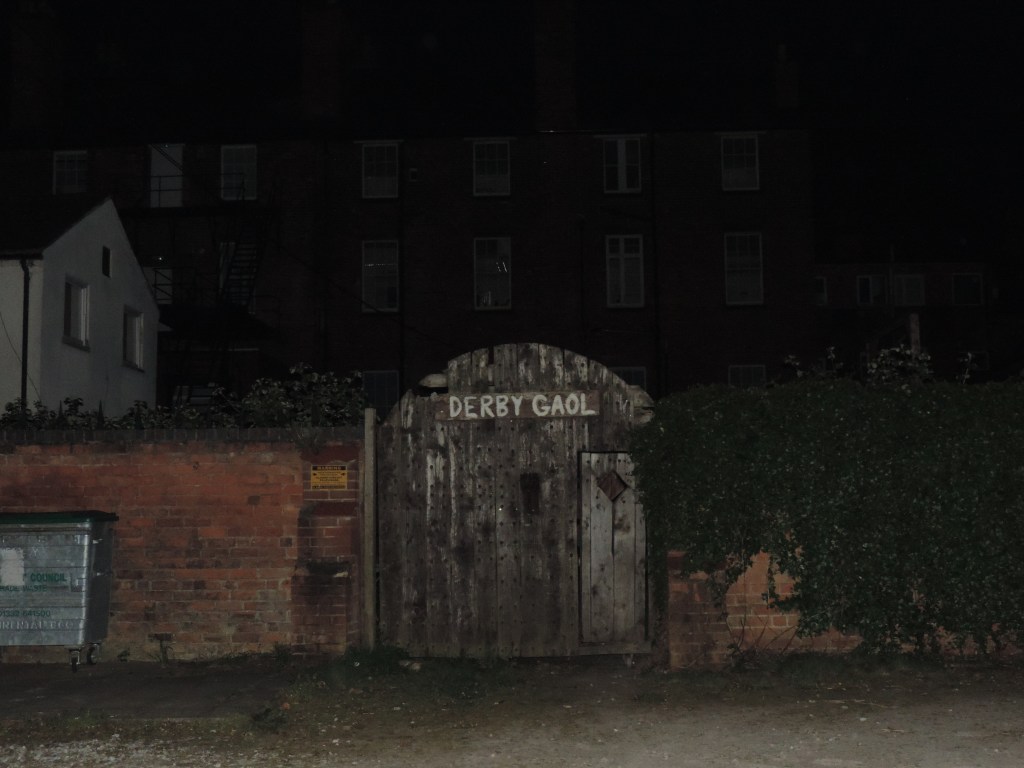
Derby Gaol

I started my walk at Friar Gate, a place I recognise as home to many shops, food outlets and bars. Throughout my walk I was aiming to locate a building of history with a deep story behind it. I was not disappointed when I came across Derby Gaol. Today the building is the host of a small museum, displaying the crime and punishment that was seen in Derbyshire in the 1800s. However, its history portrays a much darker perception of the building and this can first be noticed with the thick metal spikes surrounding the walls of the entrance. Derby Gaol was the site of countless hangings and executions, with the prison cells still existing today; available for the publics’ viewing. Although now a small museum, this building has arguably still remained a landmark in Derby as a museum piece left from history for tourists and locals to visit. Viewing the gaol at dark, was an interesting but mainly spooky experience for me, mainly due to my prior knowledge of the institution!

Joseph Wright’s House

Another theme that struck me during my walk throughout the city was the prominent inner city decay. This appeared more noticeable throughout the quiet streets at night as opposed to a bustling city centre during the day. This could be seen at the once historical building and home of Derby artist, Joseph Wright.

Although from a distance the building looks well-kept and structured, it is a different picture whilst taking a closure look, with graffiti covering the boarded up doors, broken windows and cigarette butts surrounding the floor of the entrance. Random acts of violence arise from underlying societal and economic issues, and this property seems to have fallen victim to them.

Derby Hippodrome

Derby Hippodrome once was a beautiful variety theatre and cinema in the 1900s, however today you would not believe this was the case. Coming to the end of my walk, I ended up here, not knowing what I would find. The huge building could be as great as it once was, but with a lot of work. Shattered windows and graffitied doors led me to feel uneasy so I did not stay here long…

This extent of vandalism and neglect to the building could be due to a lack of funding which leads to frustration, crime, property vandalism, run- down buildings and vulnerable infrastructure. It is clear that areas in Derby such as this one have been stuck in a cycle of deterioration for many years; the more that the city is expanding, the greater the problems in the city centre.

So, after my night time walk across the city, I did not struggle for historical buildings and landmarks to research. Some, like Vernon Gate were kept in order and were almost as beautiful nowas they were when they were built. However it seemed throughout time that several of Derby’s inner city landmarks have become rotten and run down. This is unfortunate and possibly due to a lack of funding, but will Derby ever be repaired?

Create a free website or blog at WordPress.com.

Up ↑

Design a site like this with WordPress.com
Get started