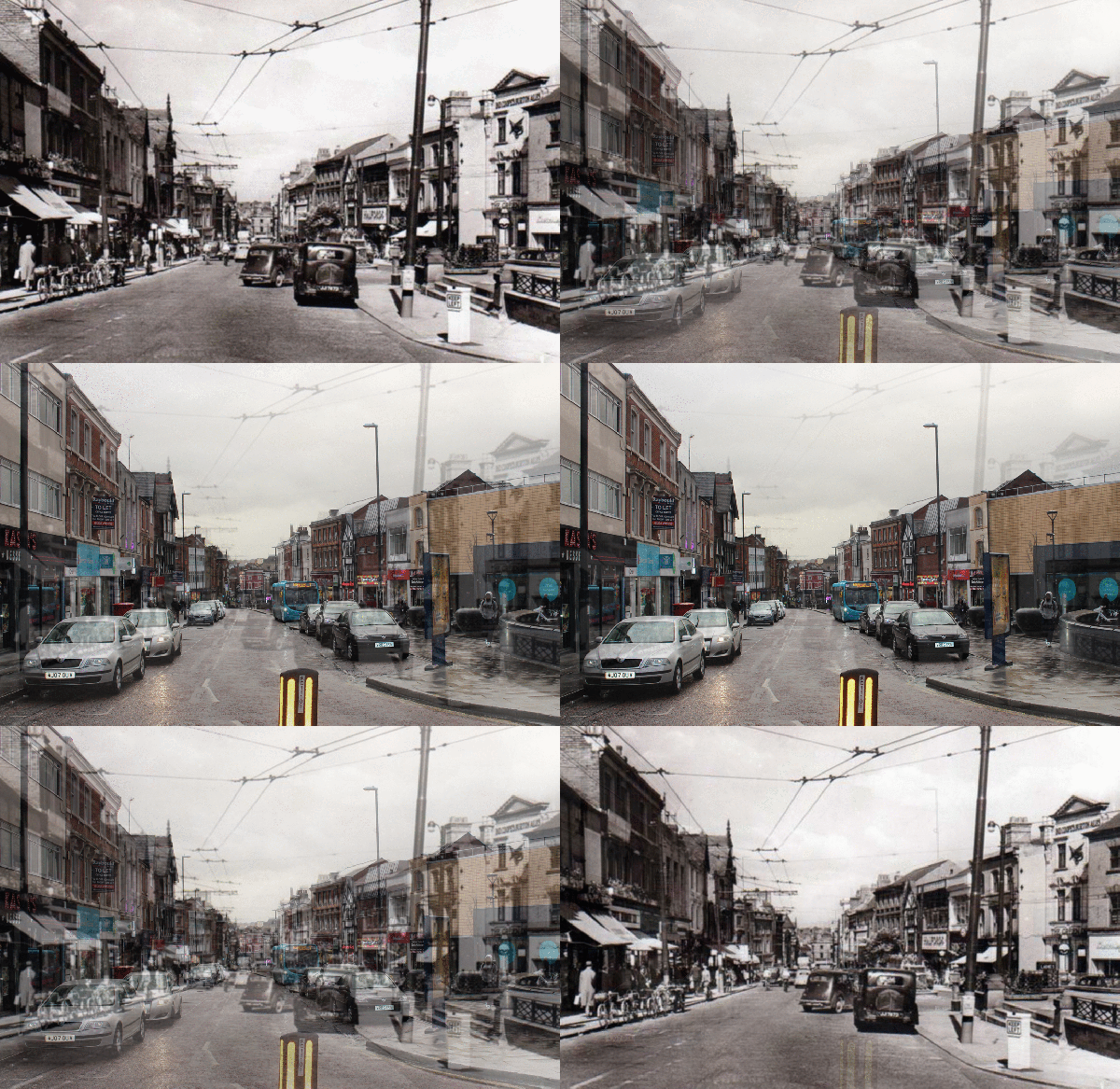
Walking; a popular enough activity most of us mortals engage with. However sometimes, stepping through space is simply not stimulating enough. For some, the traversal of time is a far more tantalising concept. One may even release a loud exhale of anguish in remembrance that they will never be able to see the technological majesty of Tenochtitlan or the wonders contained within the Great Library of Alexandria. Unfortunately, I am here to inform you that time machines do not currently exist, and even if they did – you could not travel back in time at the risk of creating a paradox! But fear not, time-traveler-in-training, although I do not have a time machine, I do have an alternative, albeit a slightly disappointing one; the ability to imagine the past!
My hypothetical time trek began at One FriarGate Square, denoted by the University of Derby logo on the map, and I headed towards my first destination, the nearby Friargate Bridge. I had previously analysed old ordinance maps and collected a number of old photos of Derby prior to creating my route. This route made use of streets that had existed a century ago in order to navigate through the city and visit the spaces that were in the old photos.
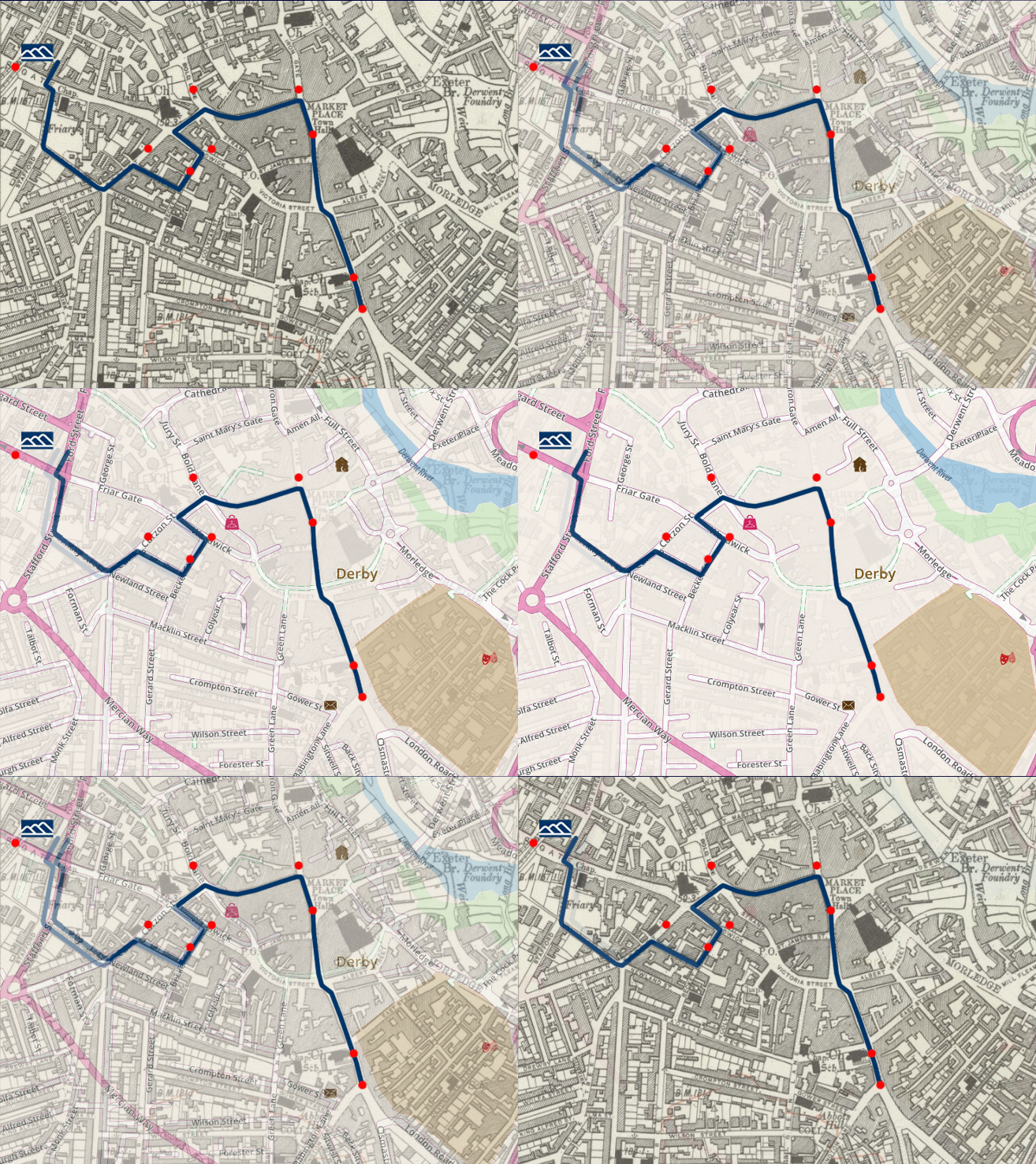
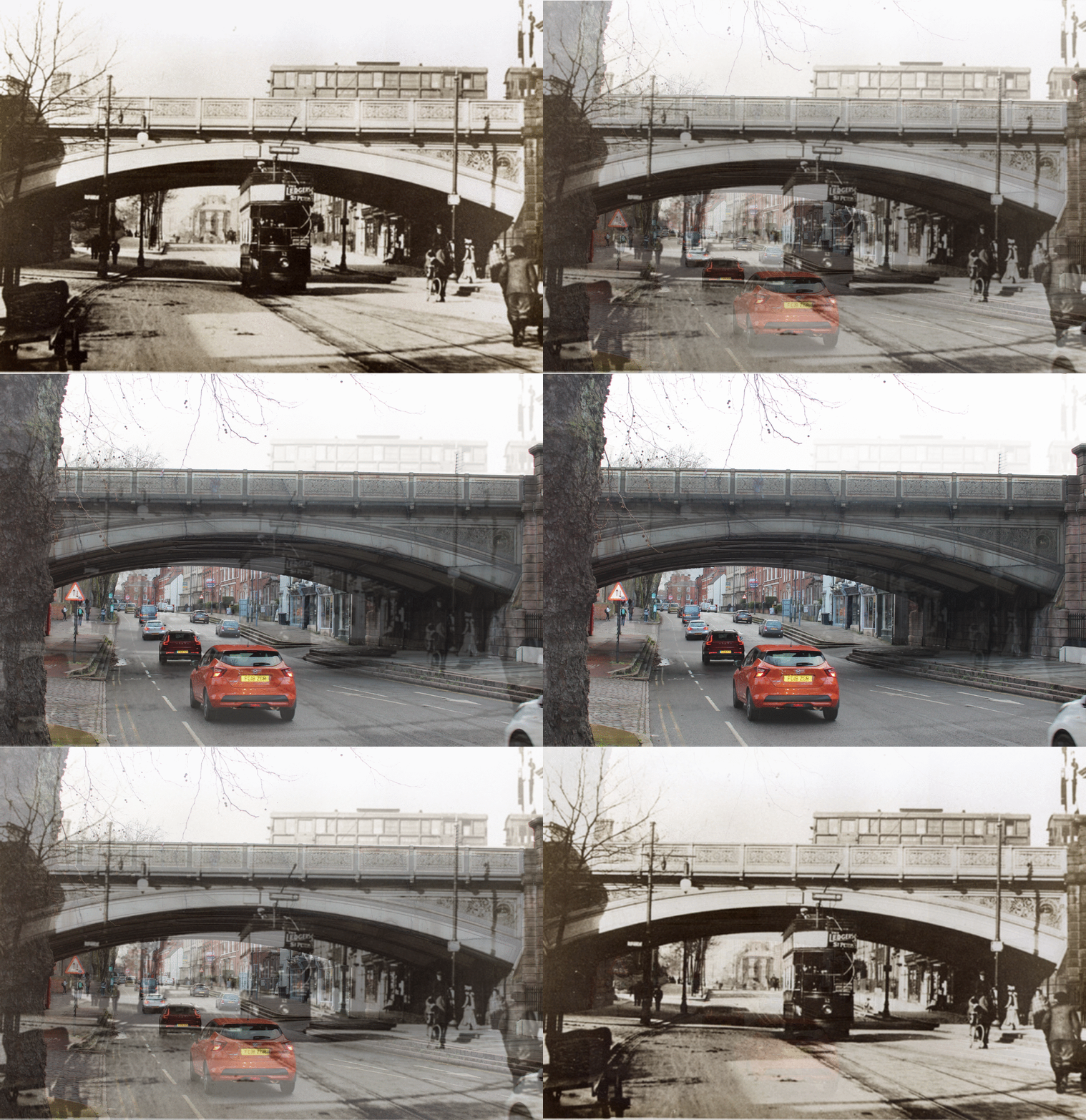
As I made my way past the unique and old looking house on the corner of Friar Gate with the hanging lanterns, I felt as if I had already been whisked away to the Victorian era and as I turned right onto Friar Gate I half expected to see Sherlock Holmes or Oliver Twist on one of their own walks. But alas, it was nought but a stream of modern shiny automobiles humming along. And as I reached my first outdoor photo studio, It became apparent that the once busy FriarGate Bridge had be demoted to an ornament. At one time trams had travelled under its embellished columns and trains over it’s weighty girders. Now, concealed in nets and dust from years of car fumes it was barely recognizable. At least the trees had made progress.
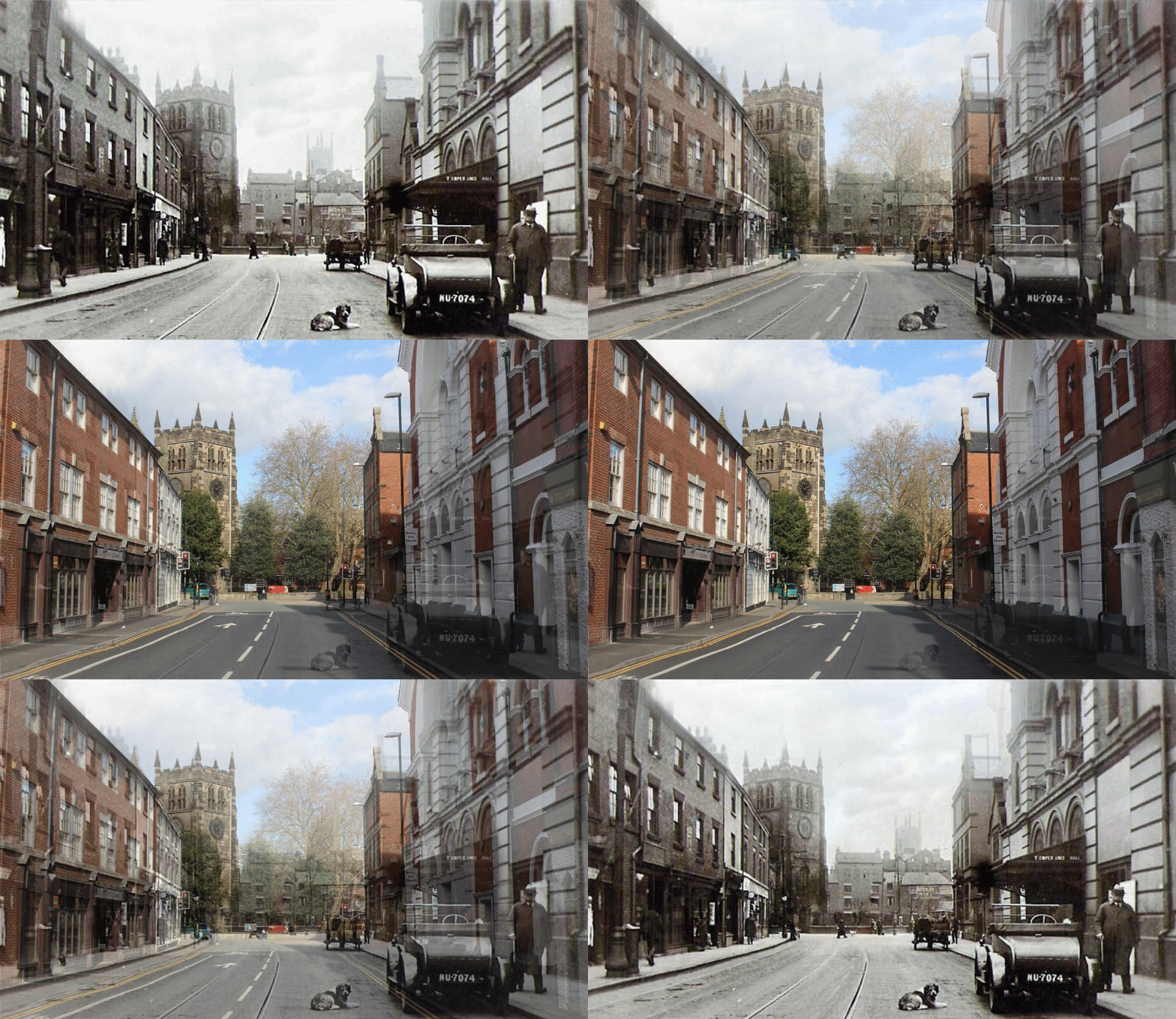
Then I travelled onto Curzon Street, via Stafford Street and Friary Street, and as I came up to my next photo opportunity I waited patiently at the side of the road. I was waiting for a large enough gap in the traffic to take a picture of St Werburgh’s Church, an issue, I’m guessing, the photographer of the original photo did not have to contend with fewer cars existing.
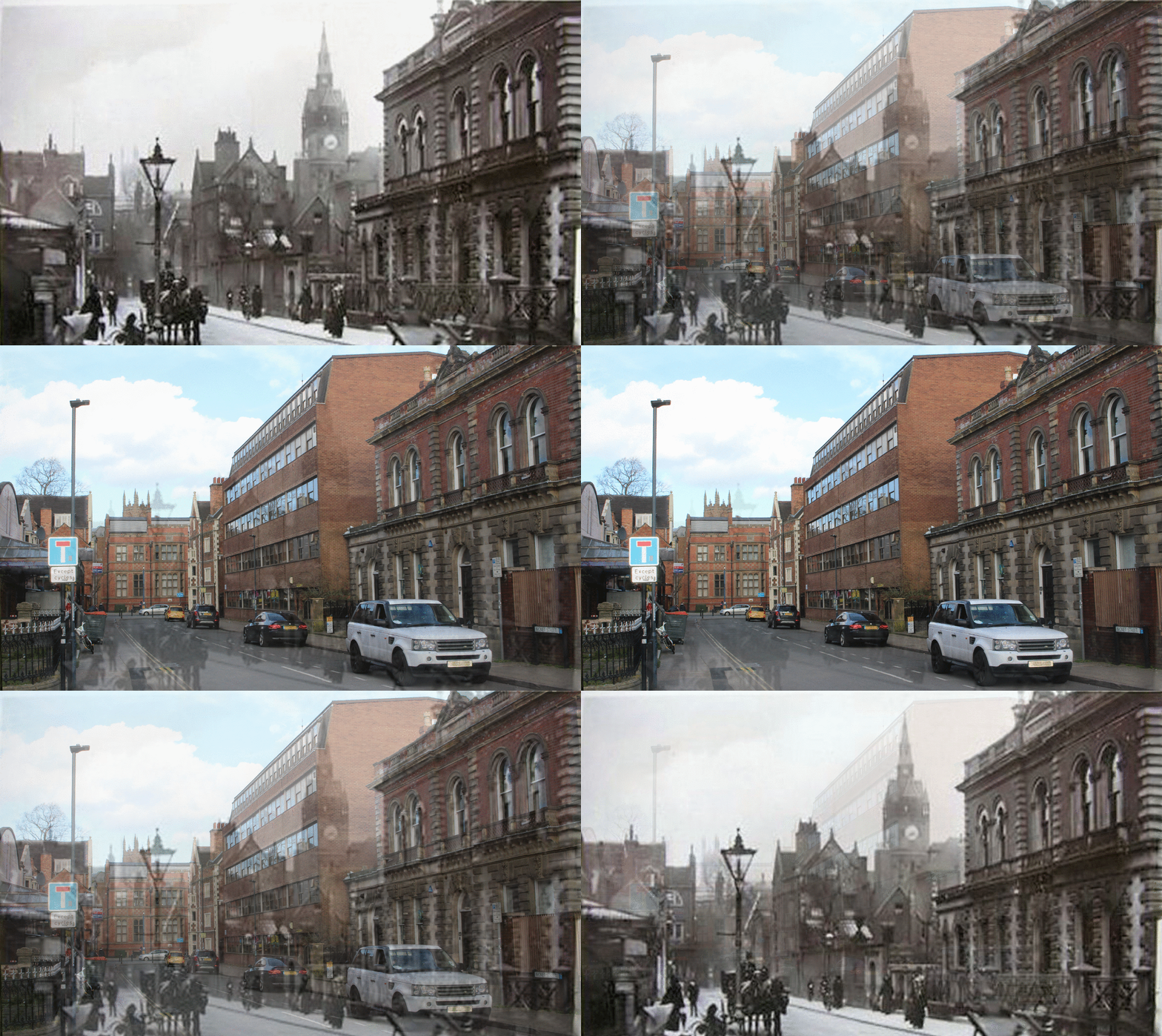
The next stop was Beckett Street, via Bramble Street. The old photos portrayed the Wardwick area to be an affluent-looking inner city with numerous beautiful buildings. To my dismay Wardwick Library was no longer visible from the street – it was concealed behind a large looming lump of mundanity called Burdett house; home to an employment agency. Even the old registry office was reduced to mediocrity with such surroundings imposing themselves on the eyes. The horse and carriage in the original photo was replaced with a new white Land Rover, which in front of that particular building, more closely resembled some kind of tacky space shuttle from 2050. Yet despite its appearance, and rumours that it might be shut down due to ‘violence and disorder’ – the Hairy Dog adds some much needed personality to the street.
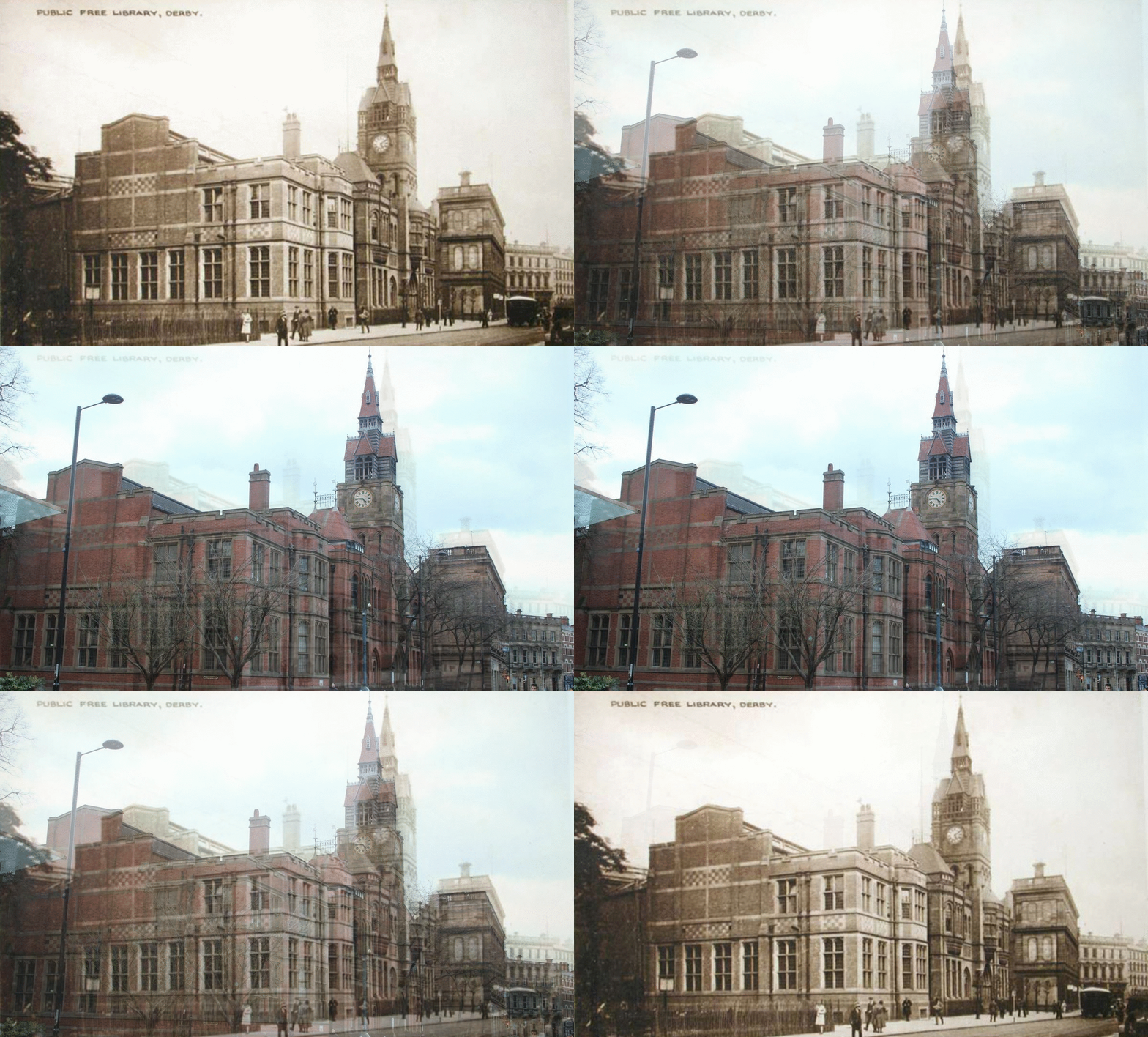
From the corner of Beckett street I photographed Wardwick Library. I was unsure about the library. It looked almost identical to the photograph, yet sadder. If a building can be sad. It looked old and worn, but still dignified. I imagine the of sense of sadness I felt emanating from the building had something to do with it’s literary contents being moved out – essentially rendering Wardwick library, a library no longer.
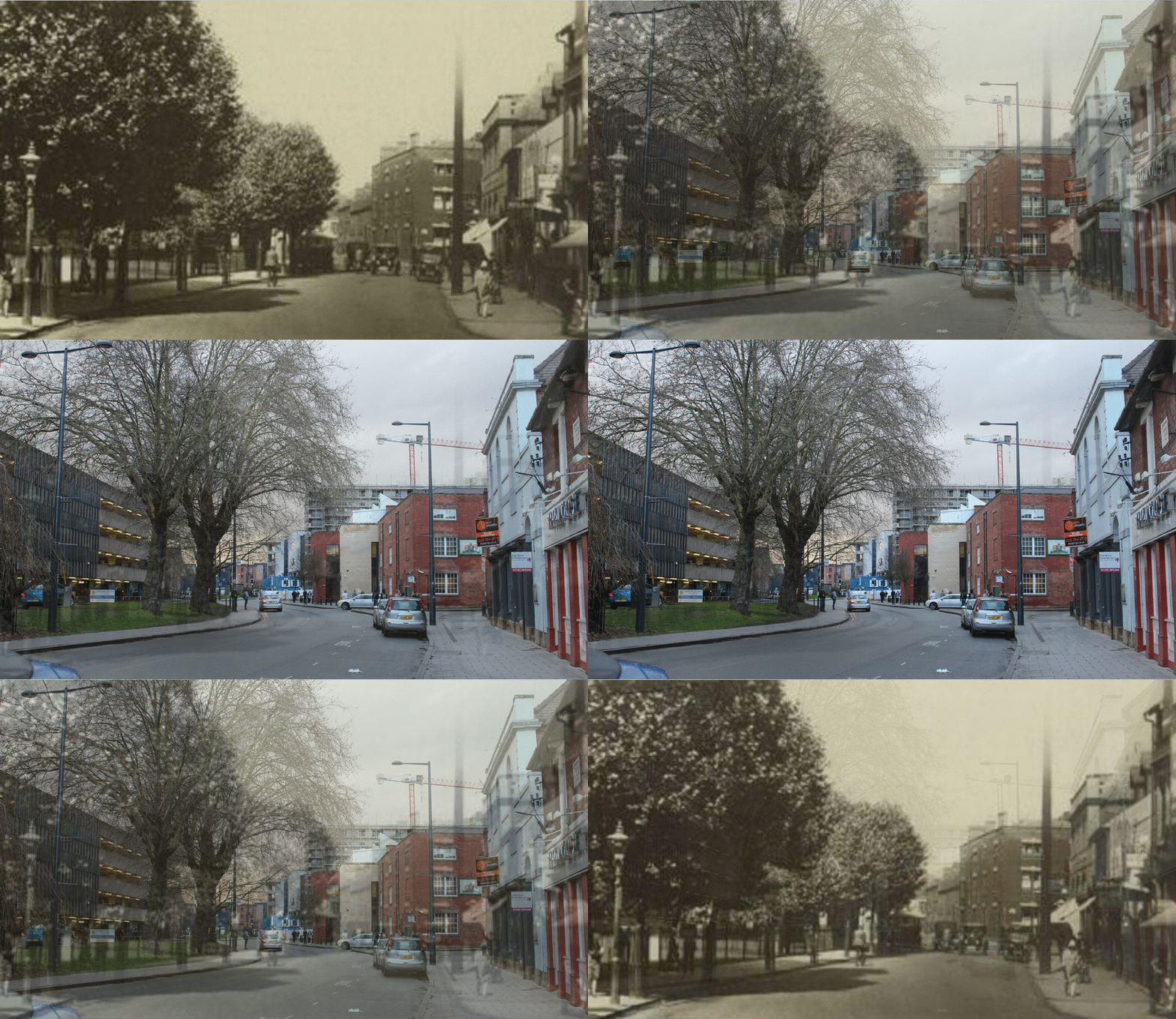
I slipped through the ‘library’ courtyard and down the side of the Derby Museum and Art Gallery to be greeted by Sarry’s Takeaway – the twelfth best takeaway in Derby, according to Yelp users – yet a one-star rating for hygiene by Derby City Council. From there I headed down Cheapside, past Sarry’s, and towards Bold Lane. There I spotted what appeared to be some kind of mid-century modernist style three-storey carpark, which after corroborating with the original photo seemed to have replaced a gated park. I wondered: is a carpark a park? It has the word ‘park’ in it. I pondered why the action of purposefully stopping your car is known as parking. At this point, I felt as if I had said the word park so many times it had lost its meaning and had become nonsensical gibberish. So I decided to cut my losses regarding the philosophy of the park of cars, when I noticed the giant metal arm hanging above Derby College. It appeared to be that yet more student accommodation was being erected. Looking at the skeletal frame of the building, I could already see the hundreds of tiny rooms, soon to be filled with young minds who will be charged upwards of £115 per week. It would have been like a feverish dream of Le Corbusier’s, if not for the inevitable plastic cladding which also adorns the student accommodation next to One Friargate Square. Because if Derby needs more of anything; it’s students!
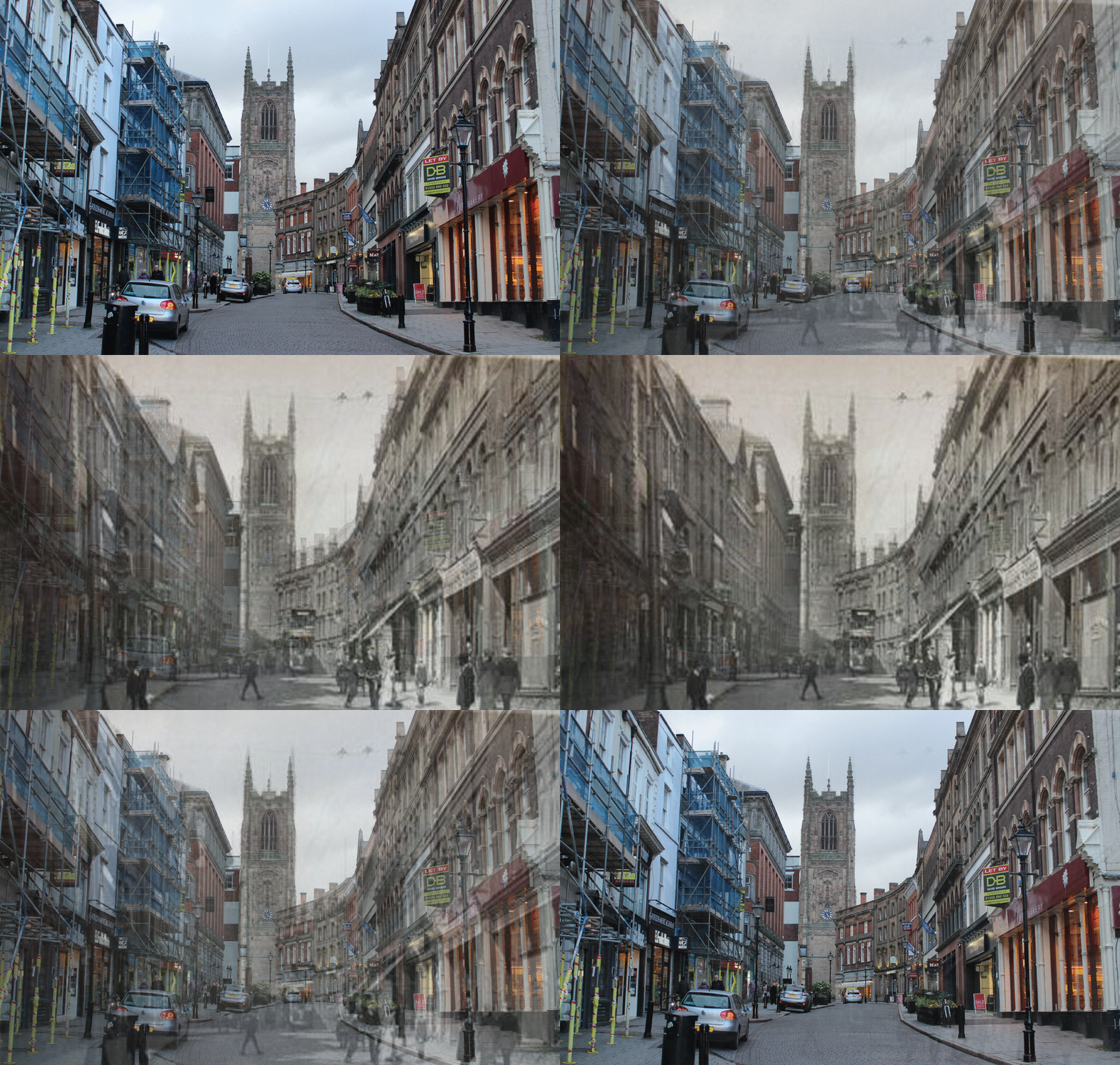
Next, on my travels I travelled down Sadler Gate to take a picture of Derby’s 212-foot Cathedral. I noted the unique thinness of Sadler Gate, which interestingly did not appear on the old ordinance map. Perhaps, it was Derbys very own ‘Rat Alley’ at some time, and the ordinance map creator didn’t feel it was even worth denoting on the map. Whatever the reason, Sadler Gate is now one of the most architecturally interesting streets in Derby, in my opinion. Between the grand arch of The Strand Arcade, the narrow winding alley leading to Vines, or the Tudor-style black wooden beams and white plaster walls of the Old Bell Hotel, it’s hard to decide which is the most enchanting. But as I turned left out of Sadler gate, and the space opened up for the town square, the enormous Derby cathedral dominated my attention. It really is quite large – it also had a presence in some of the other locations I’d visited.
The next subject of my photographic endeavours was the town hall, residing in the town square. Again, I found that a number of the buildings had been replaced by garish blocks of concrete, plastic, and glass. However, it was the waterless water fountain in the centre of the square that truly imposed mediocrity on the space. Luckily, for the ‘water’ fountain on this particular day, it was being out-performed by an enormous pink tent belonging to ‘The Ladyboys of Bangkok’. I was thankful that these travellers from a distant land had erected their tent where they did – it provided temporary respite from DerbyLive’s Assembly rooms.
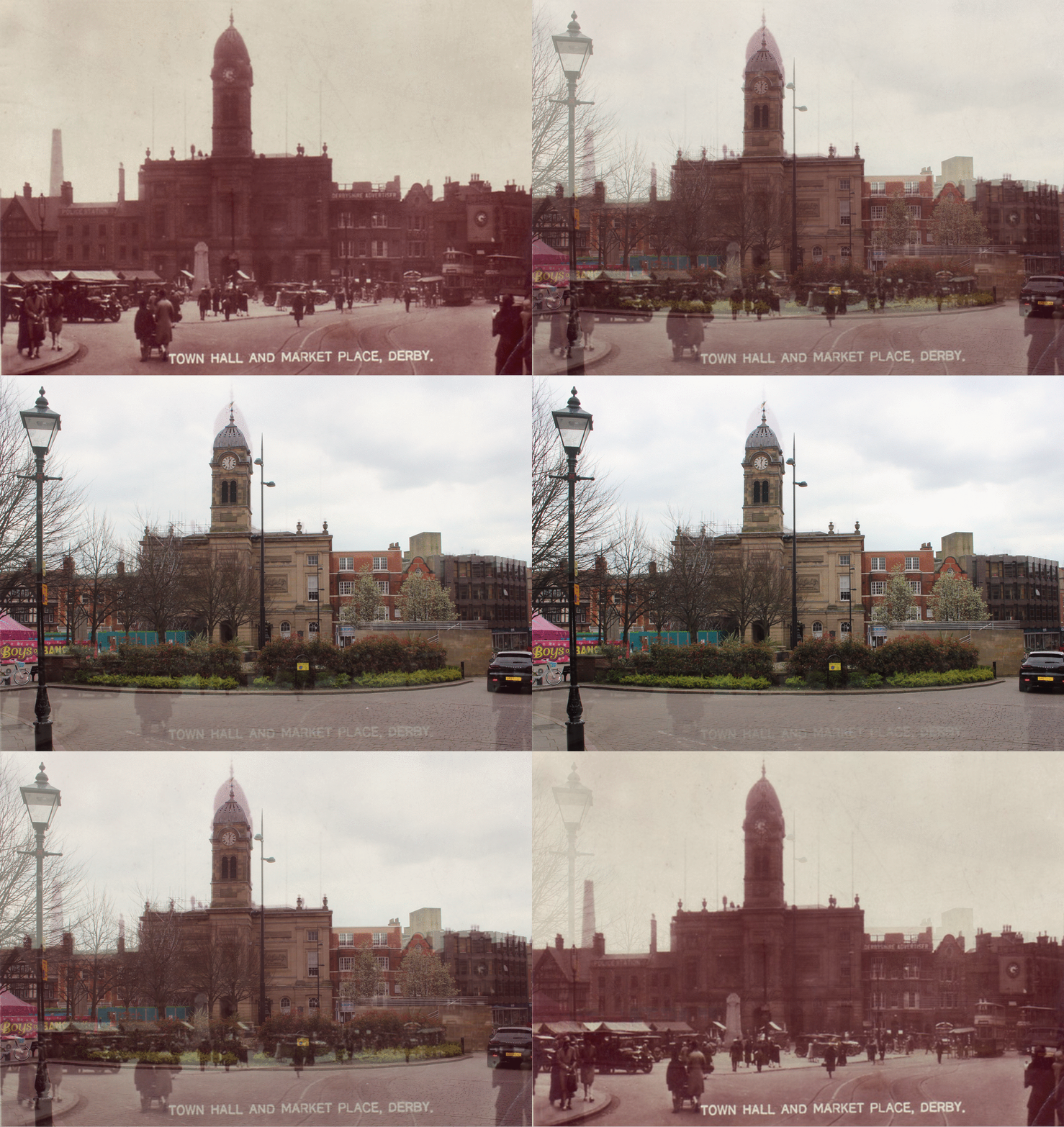
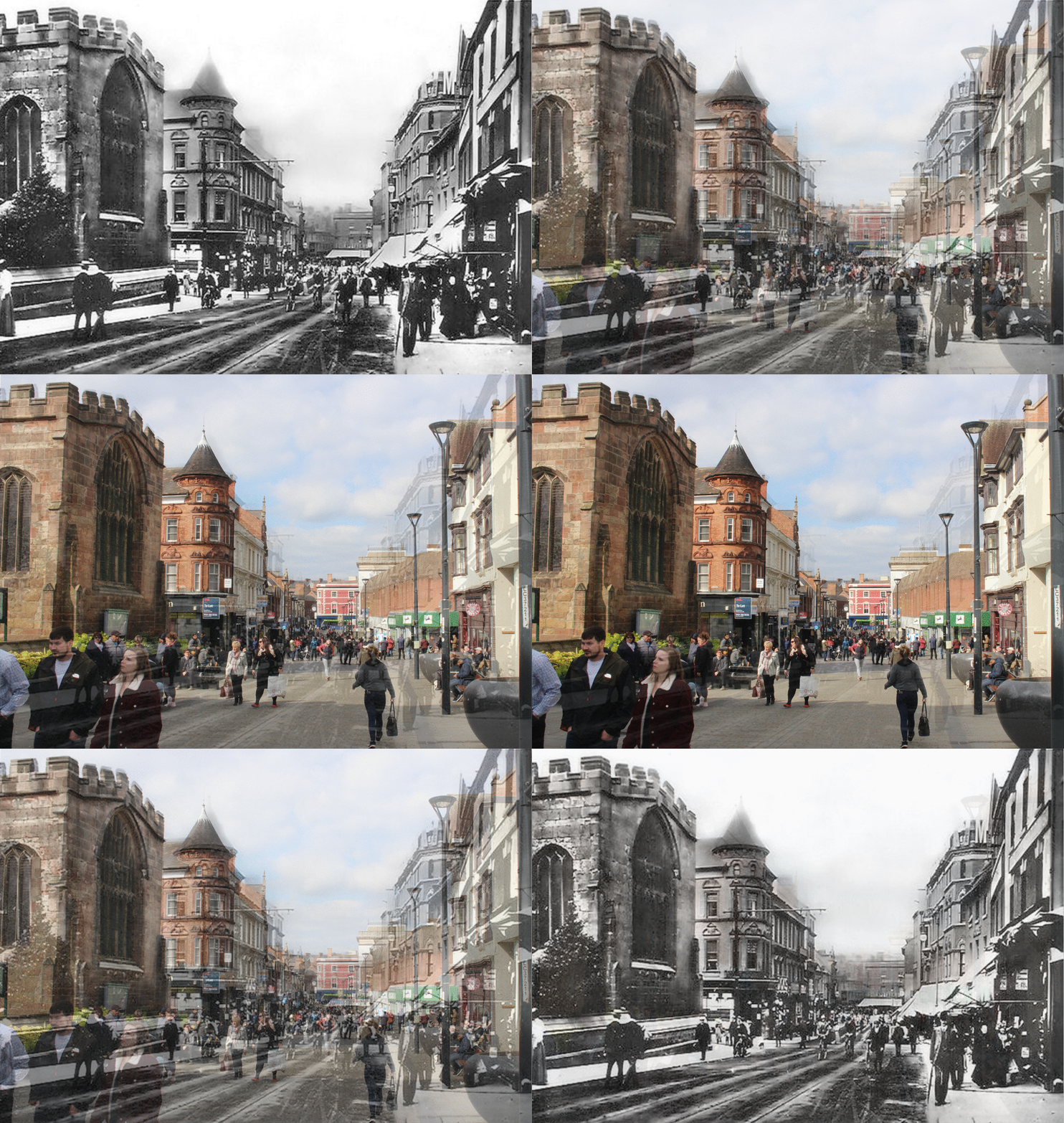
I left the aesthetic disaster, of the collective architectural medley which included the Assembly rooms, the Quad, and the town hall in the same space, behind me and headed down the Corn Market towards St.Peters Street – the metaphorical backbone of Derby’s shopping scene. At one time trams travelled from the town square all the way up to the top of St. Peters Street and beyond. Now the only thing that flowed was a steady stream of shoppers passing between Primark, and Tesco and then into the Intu Centre. This was a space automobile had not yet infiltrated, besides the occasional police van to ensure that the shopping continued without disturbance.
As I progressed up the hill I reached ‘The Spot’, the final destination of my route. I’d recently read a Derby Telegraph article about the lack of public toilets in Derby city centre, which contained an image of The Spot’s prior toilet facilities when the shopping centre was still owned by Westfields. As my route came to an end, at the top of the hill, I, a lowly citizen of Derby, could not comprehend the scale and potency of the council’s deliberations regarding this space when it appeared that they had replaced vital hygiene facilities with 4 chrome rings, which I later discovered cost £50,000. This art was the proverbial cherry on the top my excursion, both the final destination and a ludicrous demonstration of the modern function of a city. Not an environment designed for humans – but rather giant wall-less shopping centres.
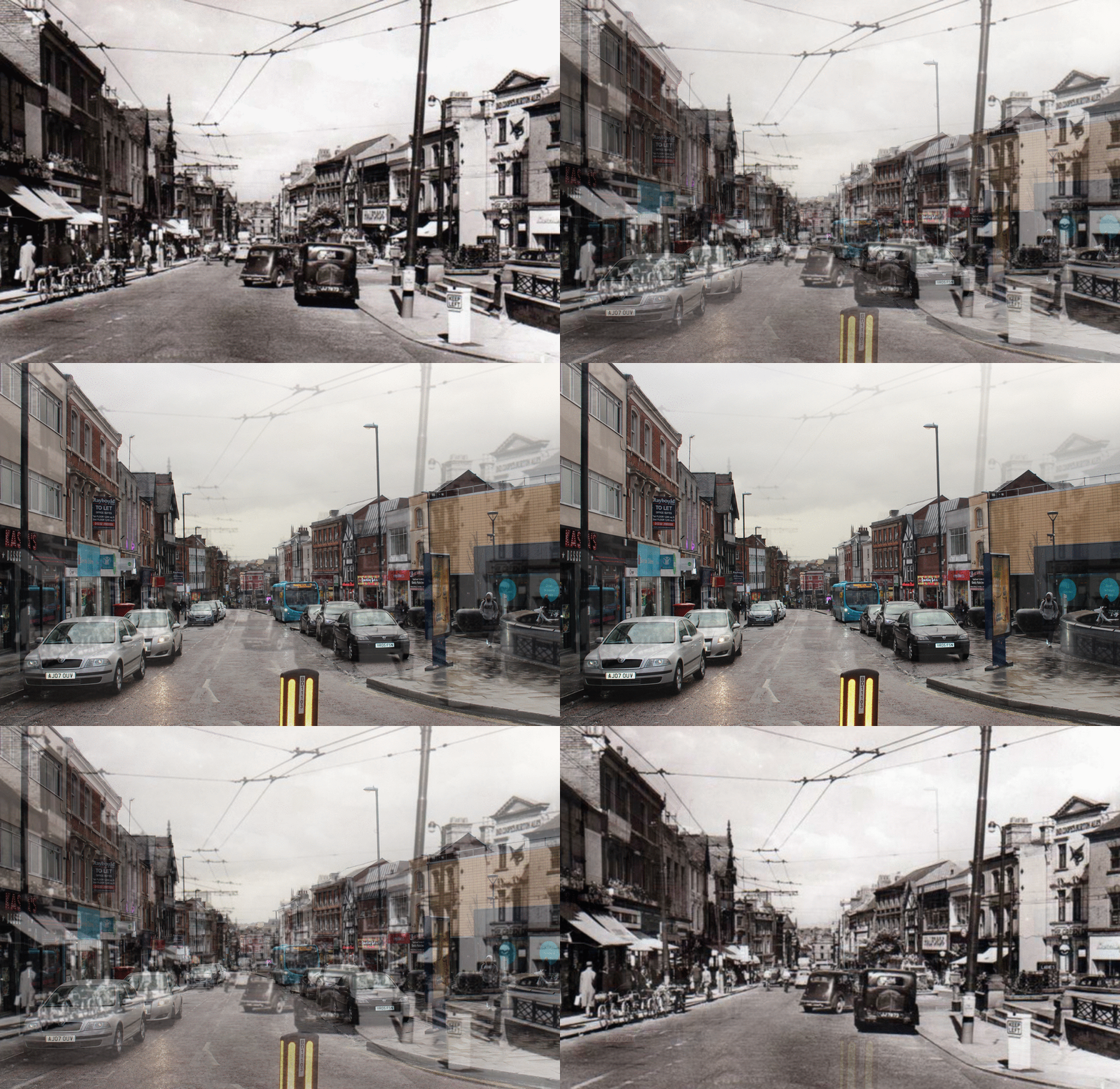
After travelling around Derby, specifically to sites that had aspects that have remained the same for a century. The most glaring differences were generally pertaining to the architecture. Derby has retained much of its traditional 19th-century architecture like Wardwick Library, Derby Technical College, and Derby Town Hall. However, the advent of the ring road at the expense of houses and churches, and the removal of trams at the expense of automobiles has also had a dramatic affect on the city landscape.
Despite these ornate historical vestiges protruding intermittently, they are predominantly surrounded by shops, signs and other markers of how the city’s spaces have seemingly been produced for the benefit of business rather than the human creature. At first glances it would appear that Derby has ditched it’s historical dowry for the purpose of producing dough.
 Derby Urban Sociology