
All environments change over time but cities resemble this change at the most drastic level. Take Jerusalem which was destroyed and rebuilt twice, besieged 23 times and attacked 52 times yet is still standing today and currently being at heart of one of the most contested territories in the present day. If we take Derby albeit on a smaller scale, we can still observe visual changes and how that affects us sociologically.
I Went on Google maps and went around several areas in Derby that were of personal interest and used the feature where in some areas of the world, you can change the year so you get a completely different perspective of the world. Because of the nature of my virtual walk, I looked through this from a visual perspective. Much of the Environments I explored has a great deal of familiarity since I visualised these spaces from my commutes from Joseph Wright Centre to Derby Bus Station and the other way around when I was in College. I picked Derby for my virtual walk because it is one of the places I am most familiar with despite my rural residence elsewhere.
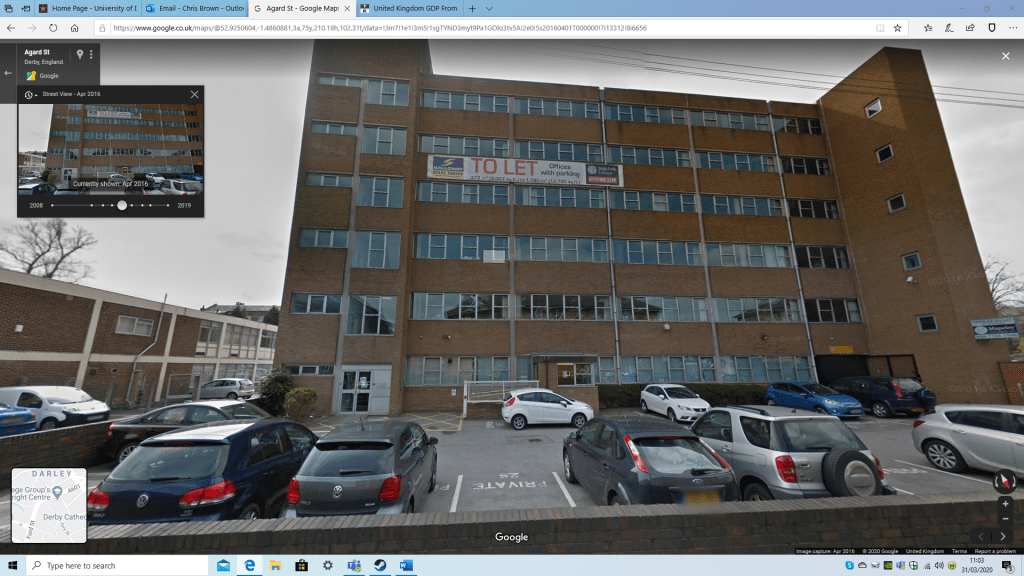
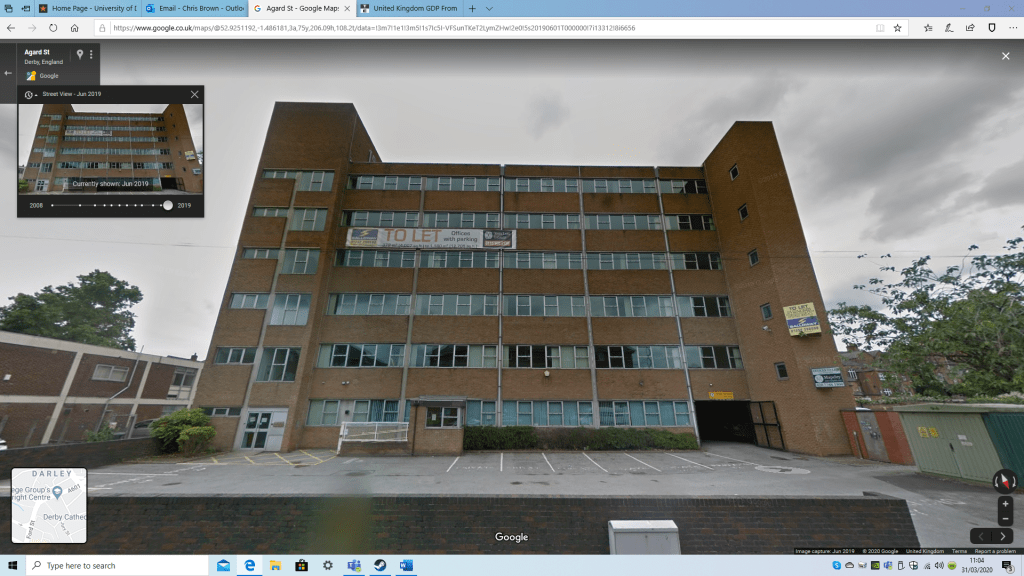
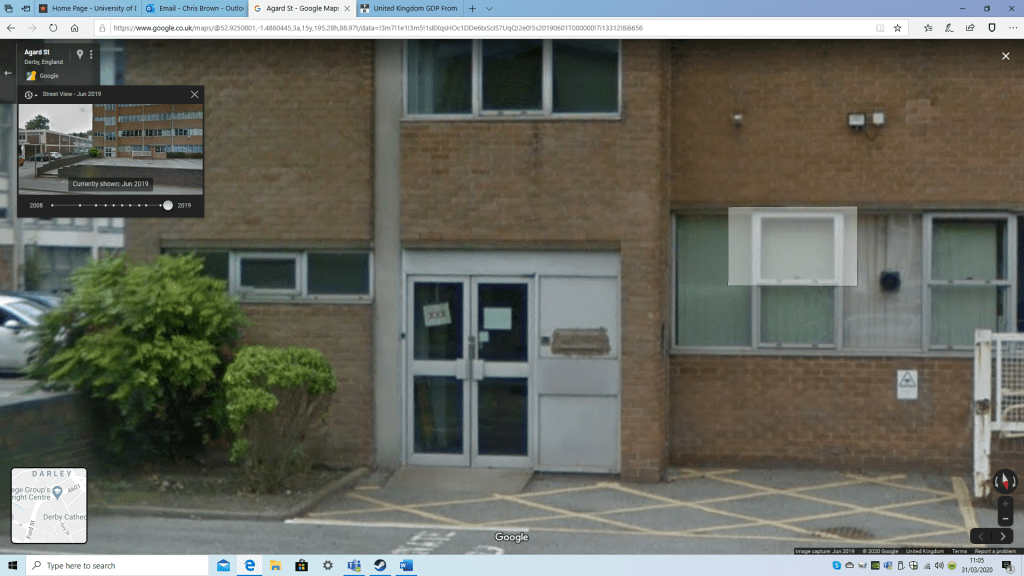
The photo on the Left is in 2016 whilst the other two are in 2019.
This building which is called Northgate house looks like a place where there people would work in the various offices which was once used hence the parked cars and a light near one of the entrances. Once this Building is empty and unoccupied, it becomes a place for more taboo sectors of the economy as shown by the triple X on one of the doors which in turn can repel most people away from the area. Once someone else rents/buys this property, it will bring new life, a new vibe, the taboo economy will retreat and the purpose of this building originally may be changed to something new e.g. university accommodation/private flats.
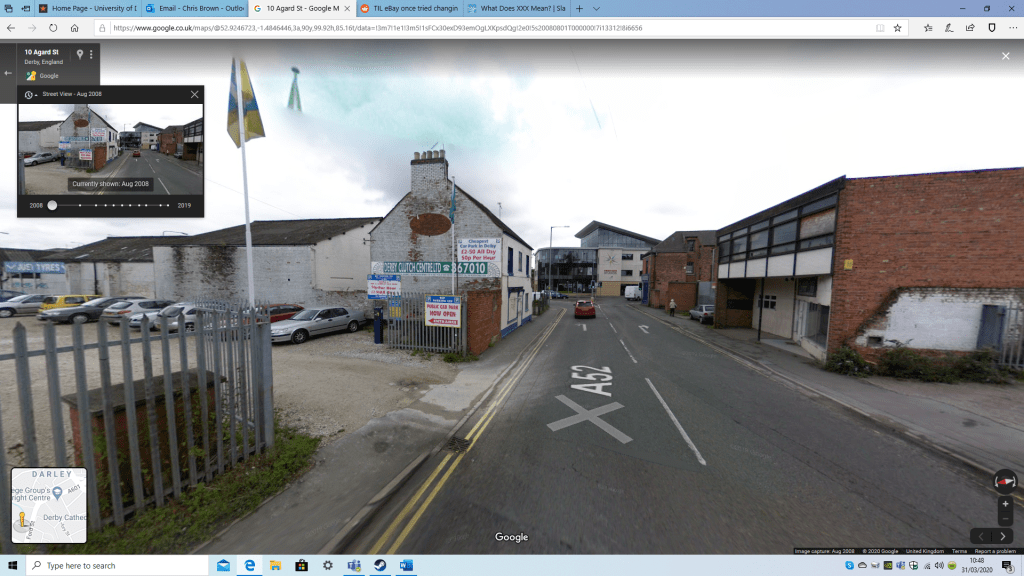
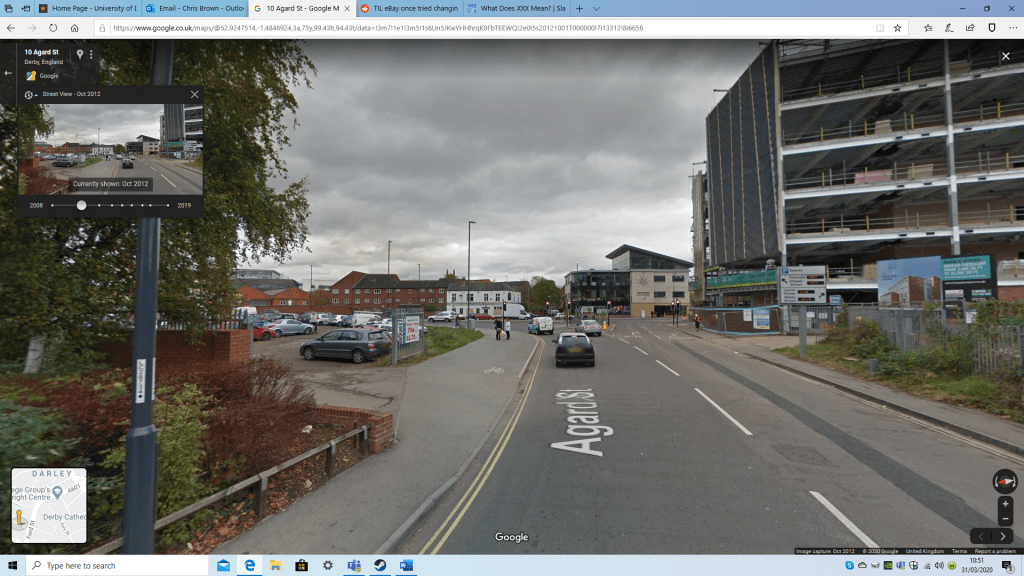
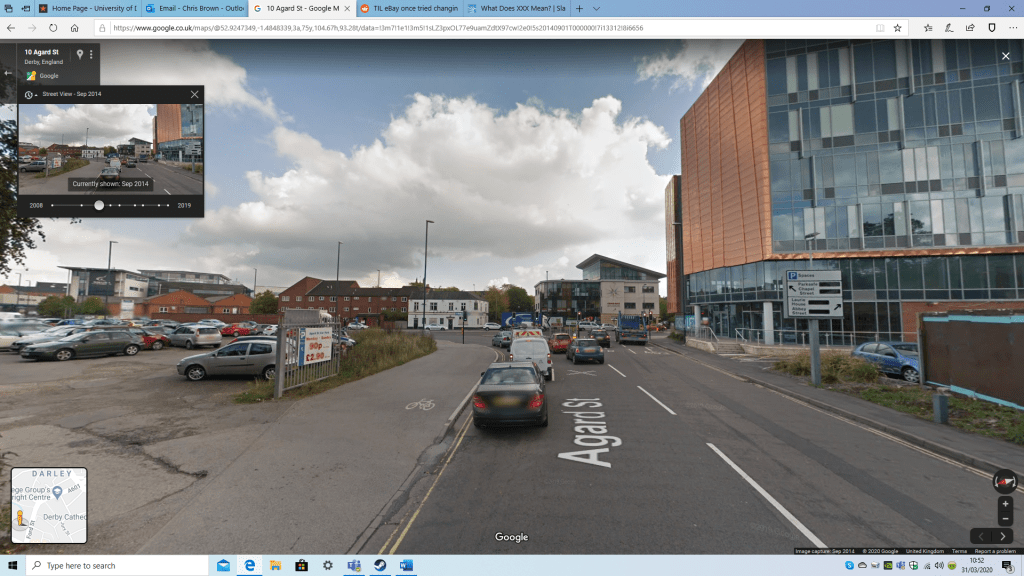
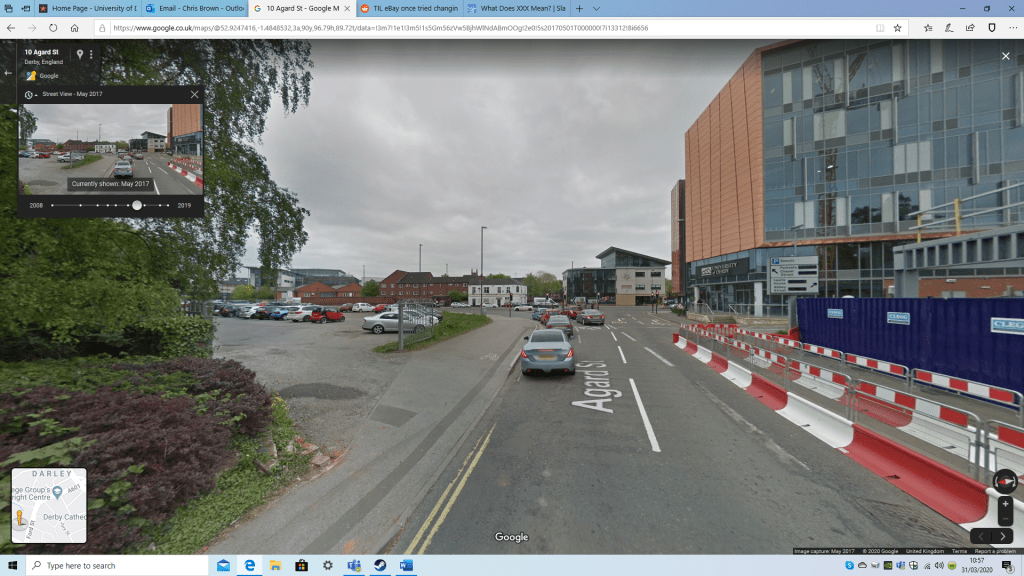
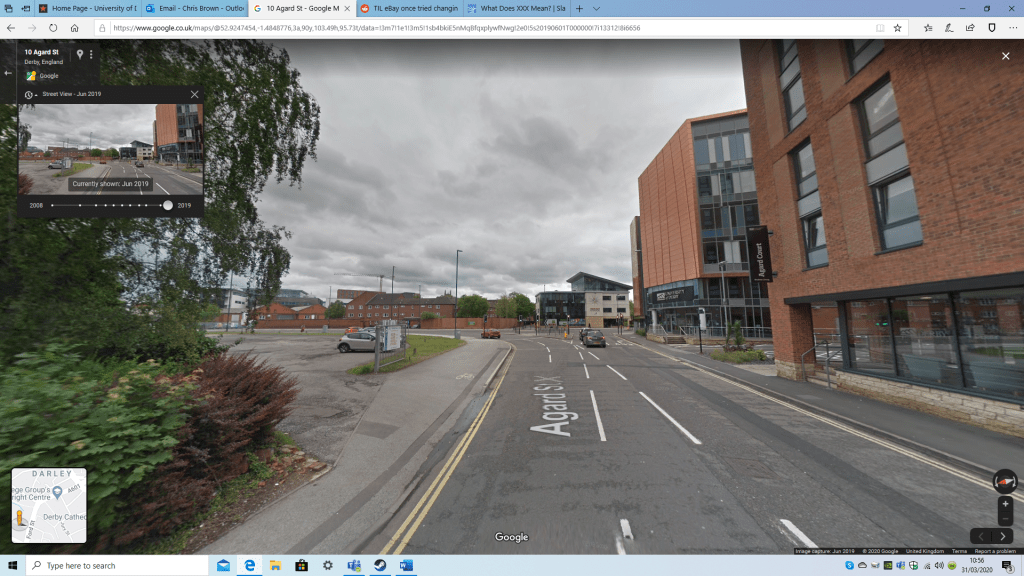
Picture years in order: 2008, 2012, 2014, 2017 and 2019.
The picture on the top left look significantly different to the rest whilst the other four look similar on the left hand side with a clear and open cark park with the only difference being the stealthy rise of the price to park your car there. What the transformation seems to show is the process of this area turning from a place with various run down small businesses to a vibrant area with the buildings on the right showing a glimpse of modern art and owned by the expanding University of Derby. What this shows overall is that areas once occupied by manual jobs and working class people are now become centres for higher education and student life.
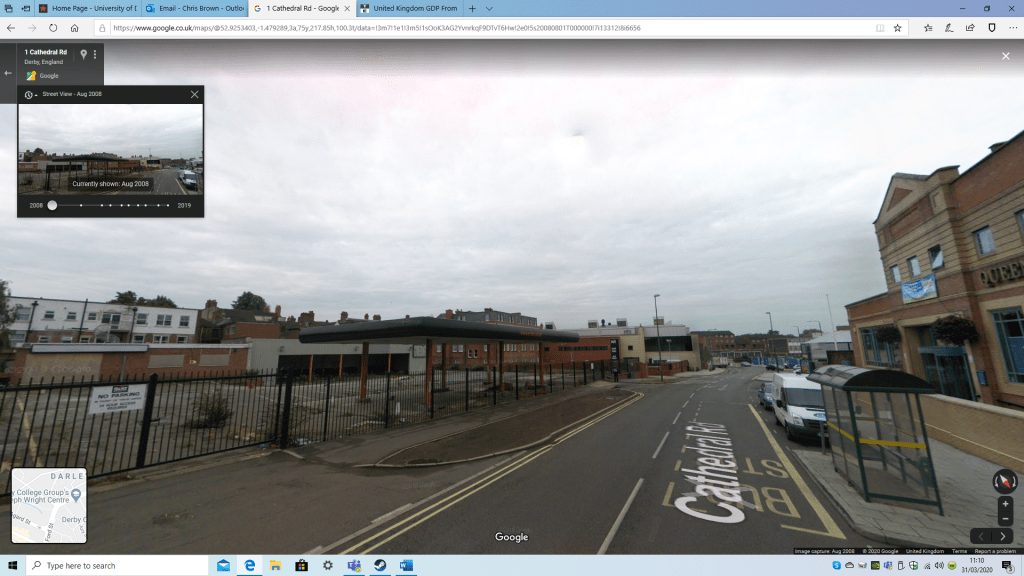
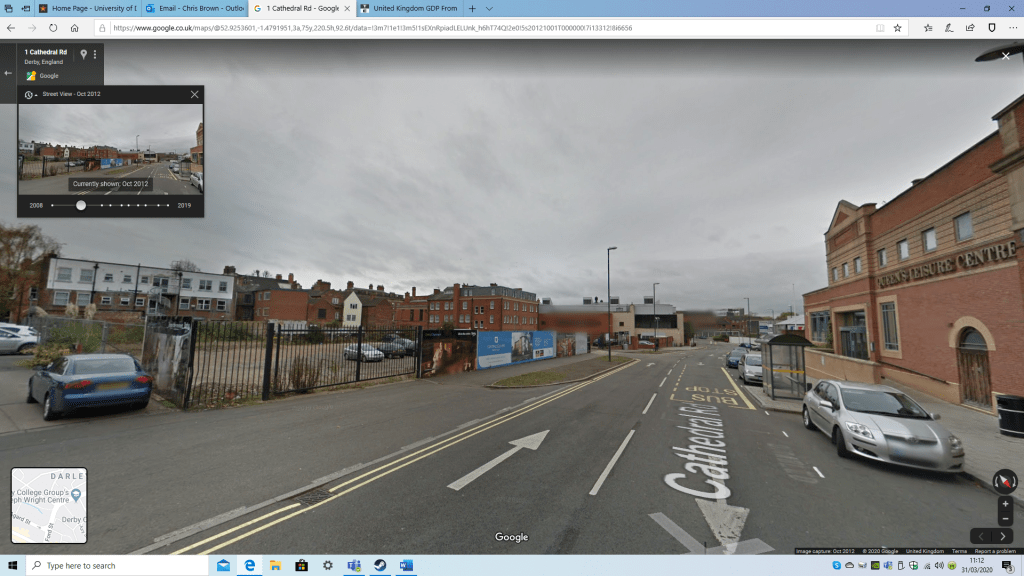
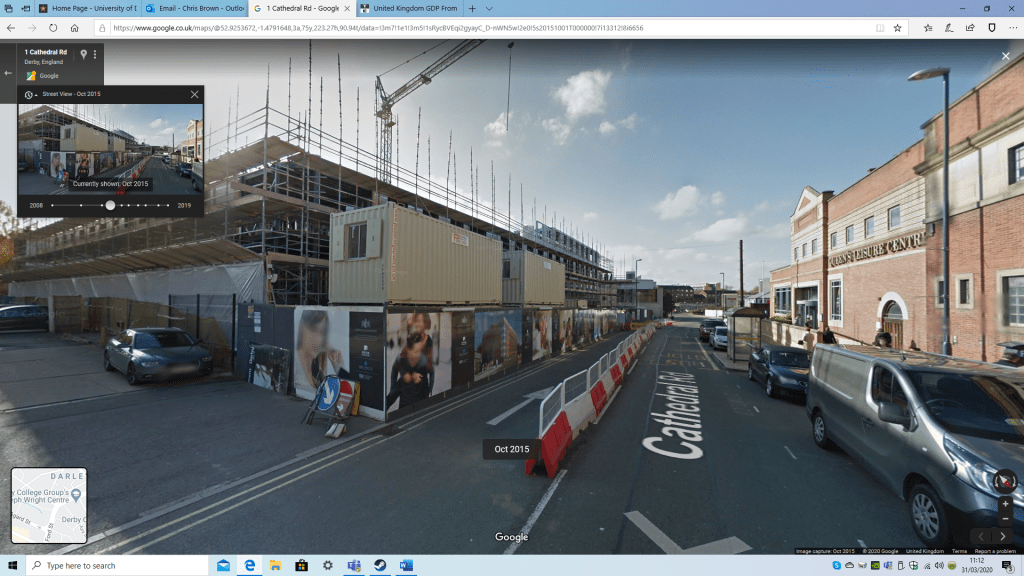
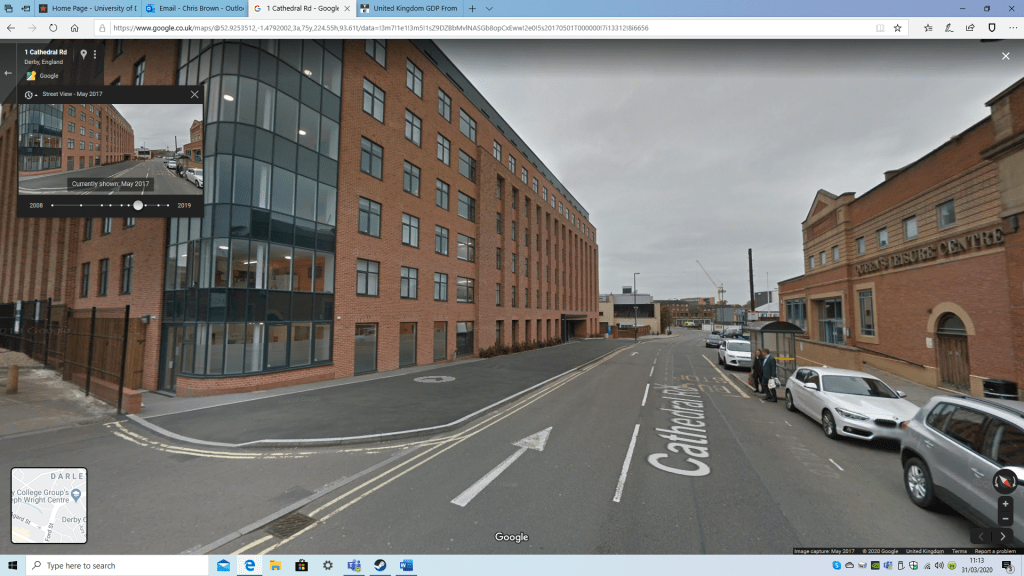

Picture Years in order: 2008. 2012, 2015, 2017 and 2019
As with Northgate House spaces that get abandoned eventually get reused in this instance again being used to build university flats from what looks like to be a petrol station. The top and bottom picture on the right have areas that are under construction. Whilst this may create a feeling of excitement, it also feels somewhat unsettling to be around the construction areas due to the fragile nature of incomplete buildings.
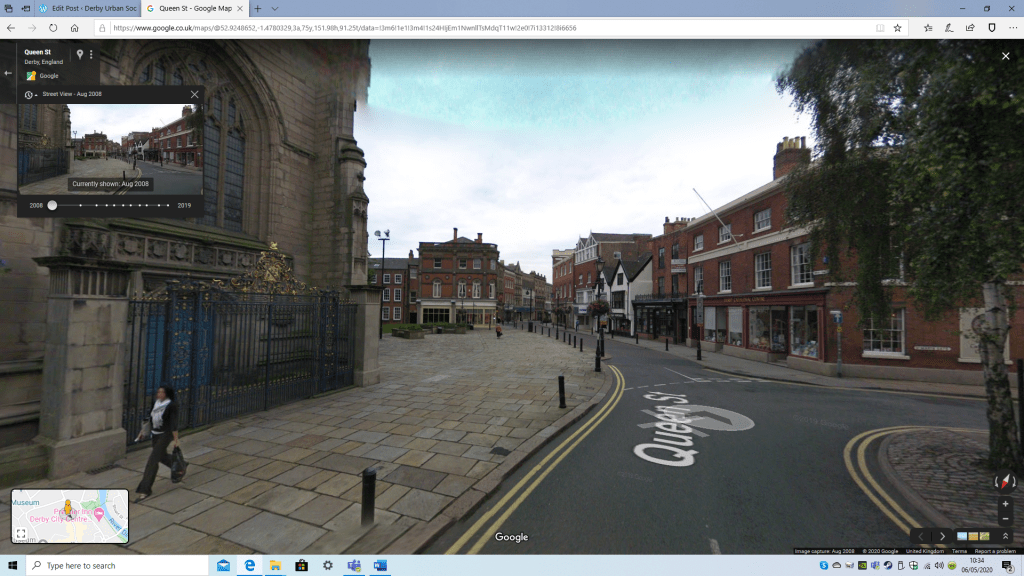
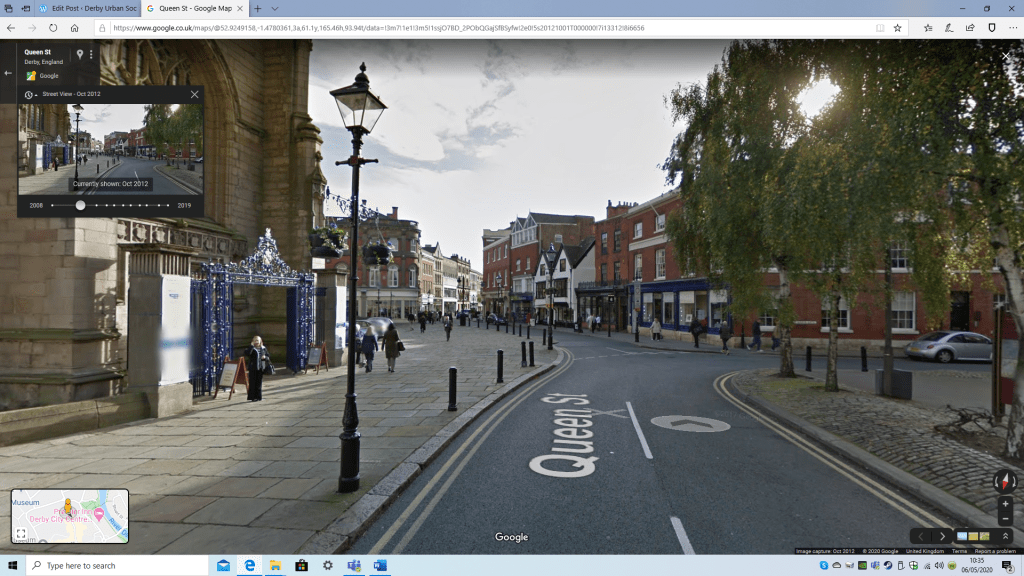
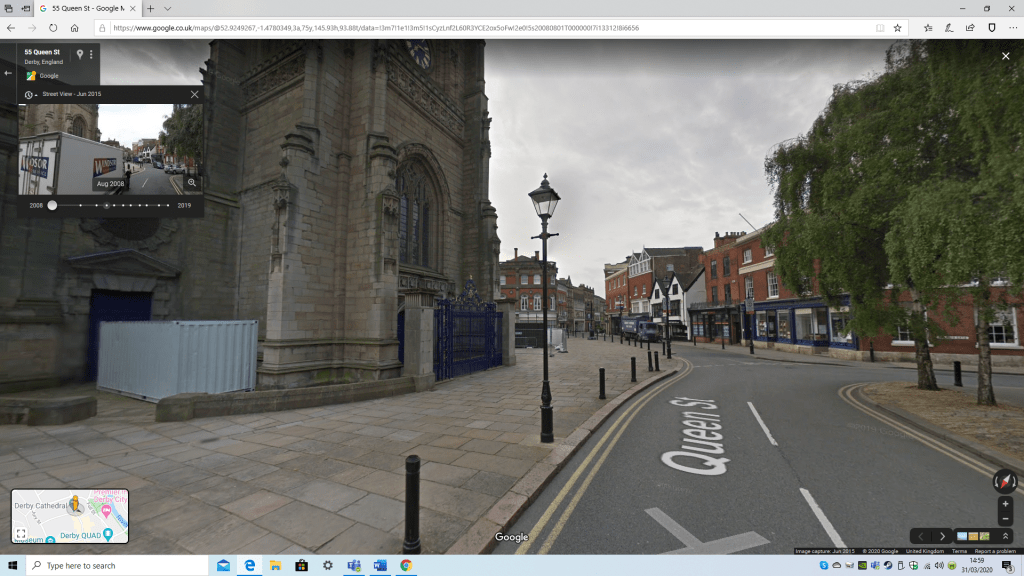
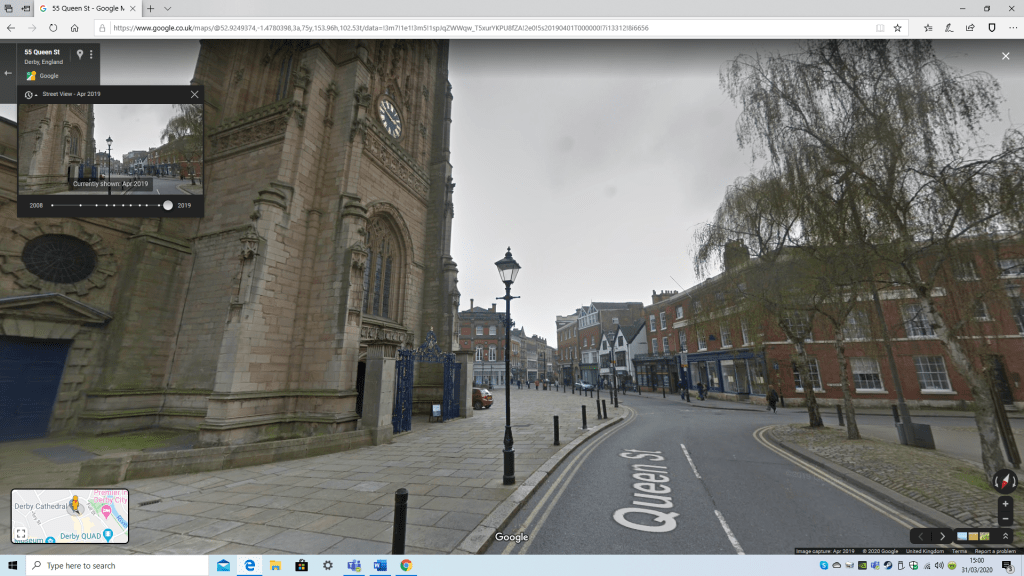
Picture Years in order: 2008, 2012 2015 and 2019.
Some areas like Derby Cathedral Church rarely change over the years. In some ways this area has gotten a little more classical with the emergences of 19th century gas lamps surrounding the church. This area of effect also seems to affect the shops in the distance which have not changed in design. As long as traditional buildings such as churches are still being used which is visually resembling in it’s design, it tends to resist the visual changes that otherwise happen elsewhere.
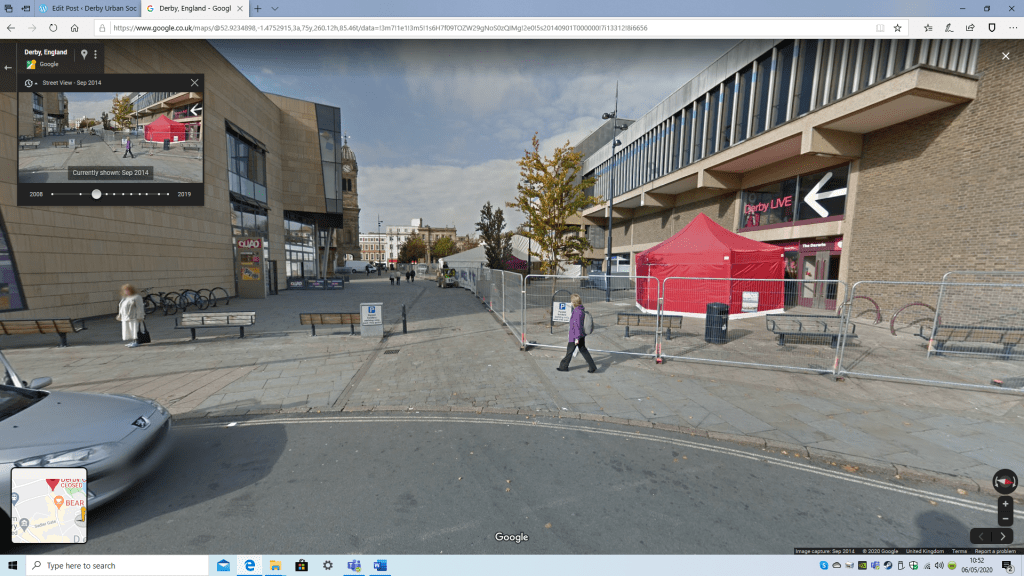
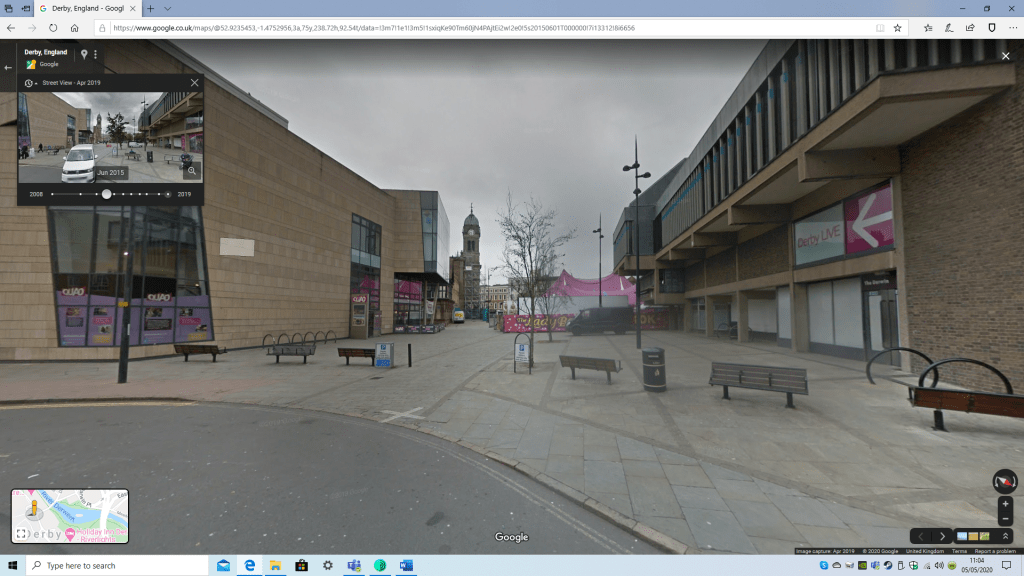
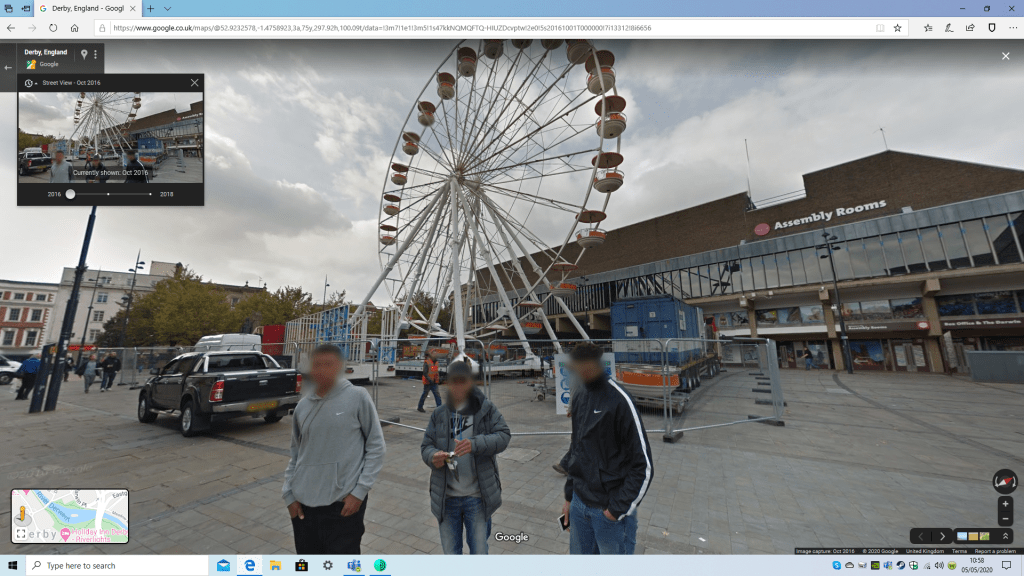
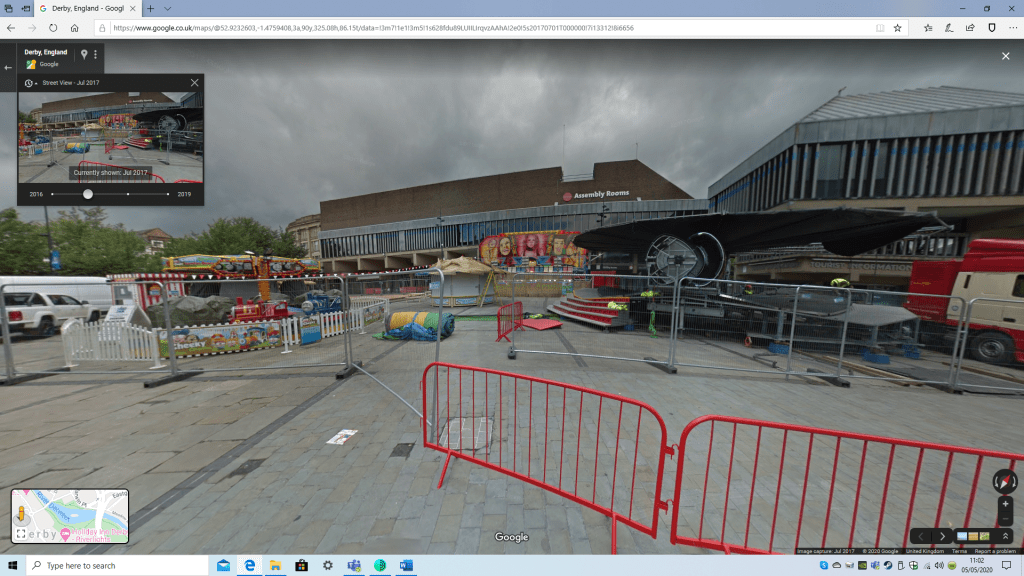
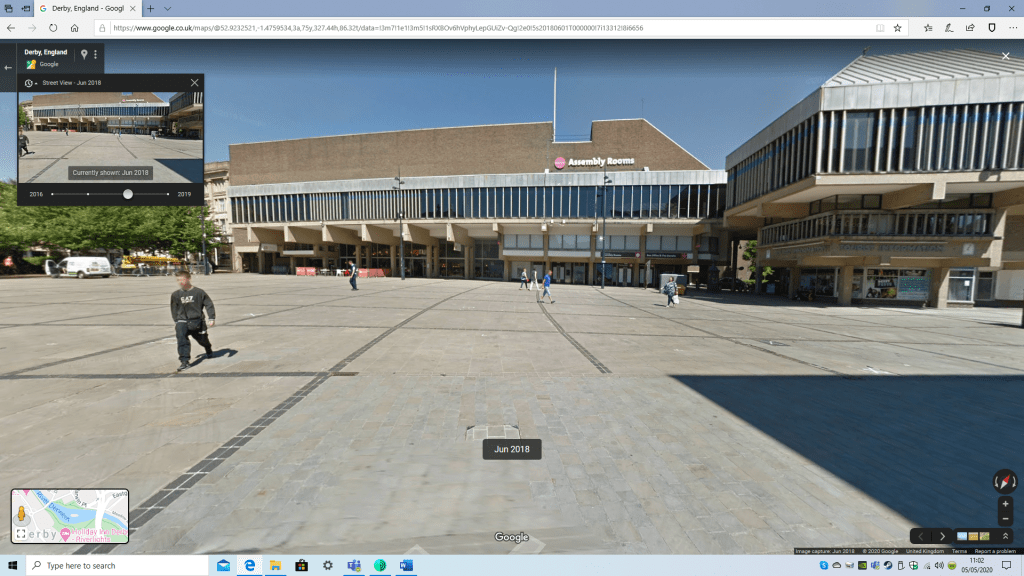
Picture Years in order: 2014, 2015, 2016, 2017 and 2018
Sometimes, in order to get the image you want, you have to be in a specific geographical location on google maps as you can see with the funny angles. This space outside of Derby Assembly rooms which is officially known as Derby Market Place truly represents a huge pit of playdough which is used to form new structures by dedicated individuals such as Ferris Wheels with audio tours, International themed performances, ice skating (Not shown in the pictures above), Beer festivals and Amusement fairs plus much more. Eventually, these temporary structures of mass gatherings fall apart, fizzle away into magic dust and return back at a later date. Different events represent different levels of urban identity with the Ferris wheel representing the distinct identity of derby, Beer festivals representing the various regional identities around the United Kingdom and festivals such as the Ladyboys of Bangkok representing an international identity in this case being Thailand.

I want to a special shout out to the Quad in Derby. The Quad essentially serves as the inside version of the Derby Market Place. From what I have seen with the exception of the café, the rooms are largely generic except when there are special events such as there being a cinema or golf course. Reflective on the use of generic spaces/spaces for hire for special events reveals that the nomadic nature of many city dwellers in order to meet the enrichment demands of a more global urban population whether they are near or far.
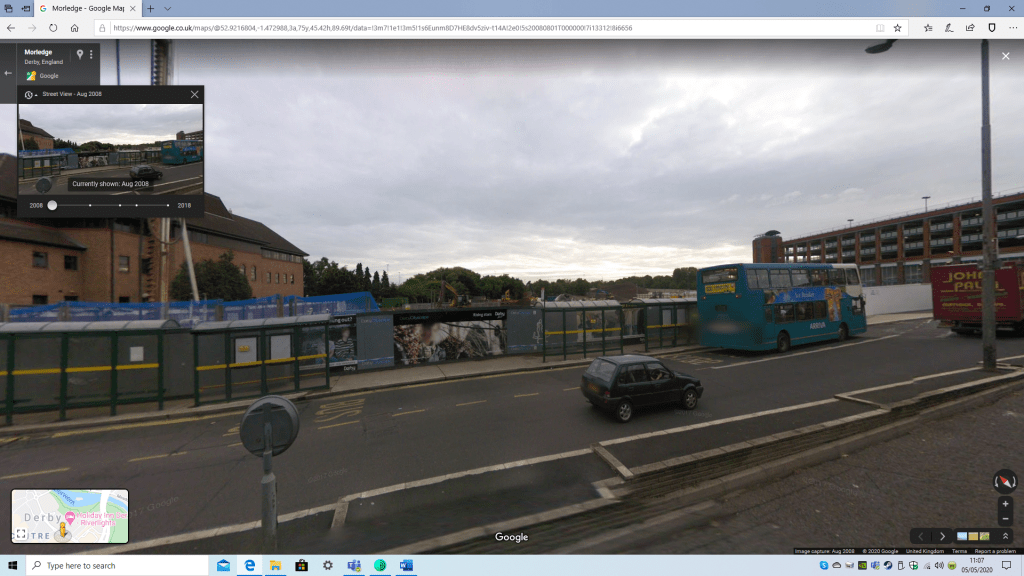
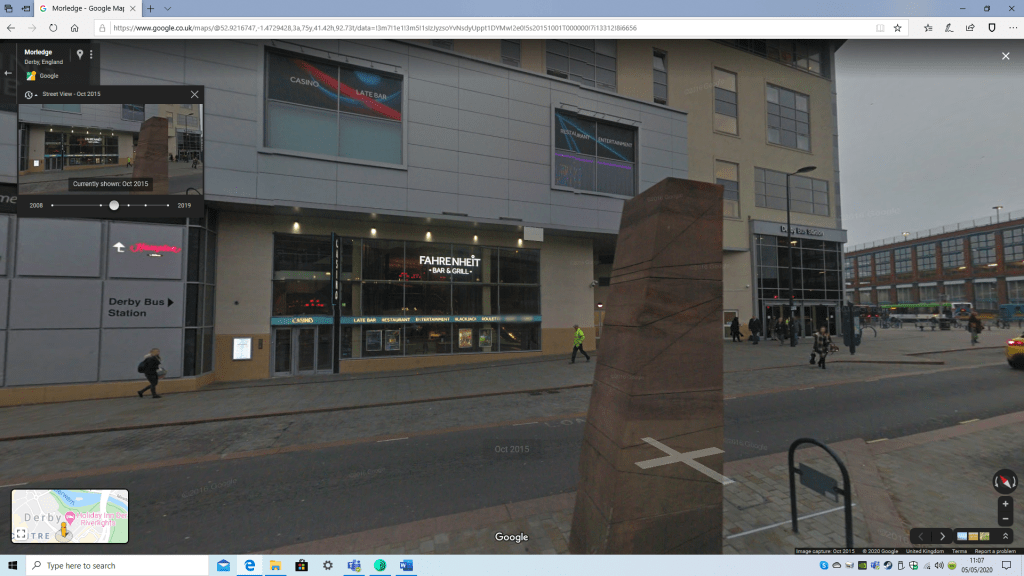
The Picture on the left is in 2008 and the other one is in 2012.
When looking at the erection of tall buildings out of nowhere, it can give a completely different feel since once an area which you could see the trees and dual-carriageway junctions hundreds of meters away now feels more like you are in a maze at a theme park. You do have to meet peoples needs after all to make rush hour more bearable by building a bus station and hotel sandwich that tastes of playdough.
For better or for worse cities have to adapt to the changing world whether that be economic or social. The cycle of deterioration and revitalisation will continue regardless but we can all help to control this process by playing our part at both the ballot box and through our collective community spirit. Looking at the past versions of the same spaces do make me appreciate them a lot more since I can better understand the processes of how we came to today. Doing the walk virtually was also somewhat more distant since while it took me away from the problems with urban life, it did reduce the number of angles I could analyse the Sociology of Urban areas. I also learnt that how hard or soft the playdough is depends on the specific space. Generic spaces such as Derby Market Place have very soft playdough. Flats, offices and shops tend to have playdough that is a bit more stiff sometimes with a softer inside and places like churches are made of near petrified playdough which is very difficult to reassemble.
Derby will always be a city I will look at as a reflection of changes that happen in the wider world due to the vast interconnectivity whilst I retain both my sense of home and place elsewhere and avoid the chaos of more intense urban spaces around the country and around the world. The playdough will always be there but how we use it will be detrimental to the content of our urban spaces. Our ancestors will be watching…..
Christopher Brown – 100441551
 Derby Urban Sociology