
This blog will focus on derelict buildings and empty shops on the high street in the city centre and it’s outskirts of Derby. Ruined, deserted buildings such as the ‘Assembly Rooms’ and the ‘Hippodrome’ which were previously cultured venues but are now nothing but ruins. The walk will also investigate how the citizens utilise the disused, empty urban spaces.
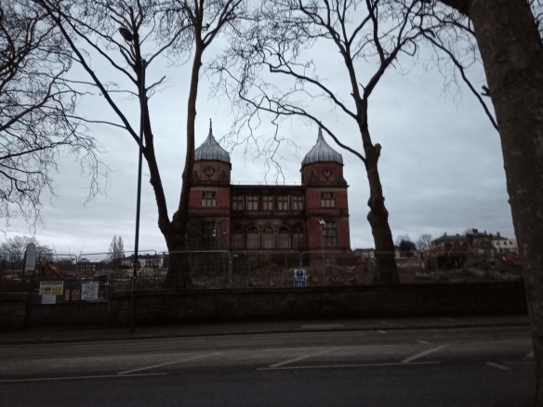
Uttoxeter New Road was the beginning of my walk, strolling past the derelict factory decorated with unappreciated arts. I walk on Mercian Way Road heading towards the London Road Community Hospital. Which remains a rugged Victorian architectural building with hot pepper roofs. The two ancient, lonesome buildings offer gothic characteristics which is captivating to the human eye. The two buildings lure me in to appreciate subtle details the former hospital possess. Whilst it’s surroundings in dust and rocks from the demolition of other parts of the hospital. Walking on London Road is the equivalent to travelling back into time to observe what urban life was like previously. Such urban spaces is a comparison to an elaborate museum as Lefebvre (19698) would describe it as. Proceeding to observe my current surroundings and observing the historical buildings, I notice a father and his juvenile son appreciate the former hospital across the road as they exit an occasional event. The modern cars parked outside the former, outdated hospital premises portrays a juxtaposition between the past and the present. Exiting London Road onto a smaller, quieter street approaching towards the Intu Shopping Centre. There was not many pedestrians walking by or across the dual-carriage way outside the shopping centre.
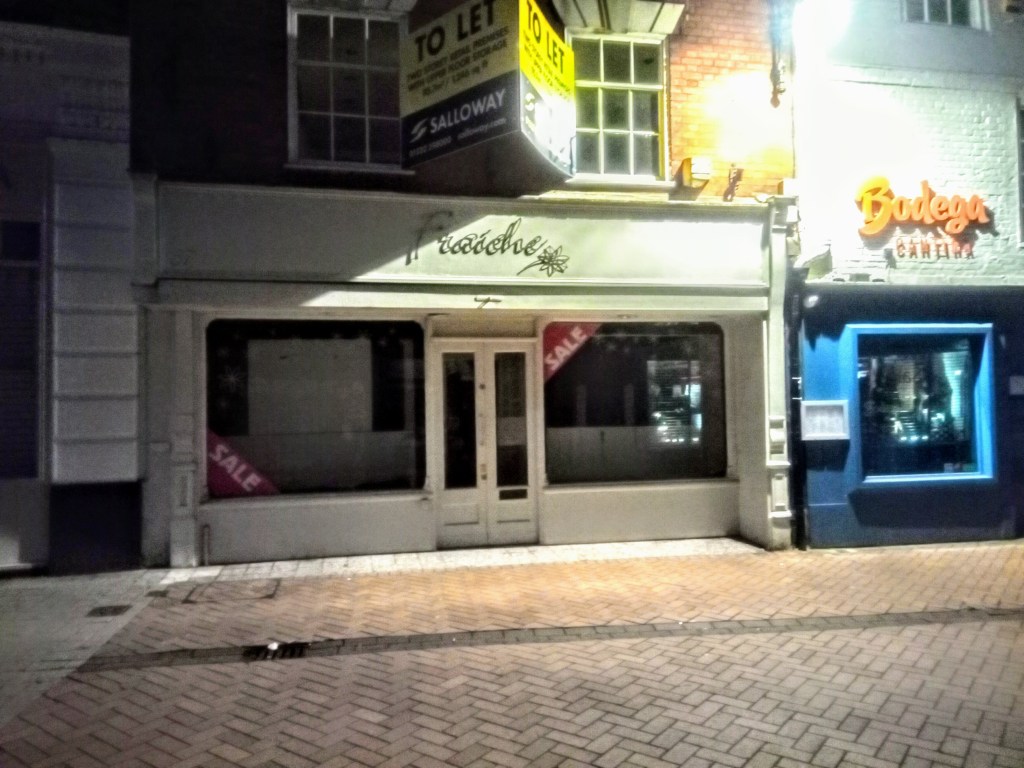
Approaching the city centre and passing by multiple shops, I had noticed many of them were empty or covered in ‘CLOSING DOWN’ and/ or ‘SALE’ signs. The closed dessert shop on London Road was boarded up, the assumption that came to mind was to prevent squatting and how the city is planned to disadvantage the homeless, Watson (2009). The poor congregate outside the shop’s entrances that provide limited shelter and cocoon themselves into tired quilts and blankets.
Walking through the Corn Market Street, I observed the abandoned venue which is located in the city centre and is known as the Assembly Rooms. The building is dull, dark and lacks character which was rebuilt in 1977. The surrounding area of the damaged property is deserted and is ignored by walking passengers. Thus modern cities require creative populations according to Landry (1978). After spending a few moments observing the former cultural venue, I approached to the Sadler Gate high street, looking above shop windows. I had noticed that a lot of the buildings were constructed in the Georgian and Victorian era. Although, walking down a narrow, short high street, many of the stores and buildings were empty, or closing down. A homeless man sits outside a shop looking at every passenger that could possibly give him food or spare change. Seeing such struggle from another individual had made me felt grief and upset. The destitute man utilised the space to help him find the funds in order to survive another night.
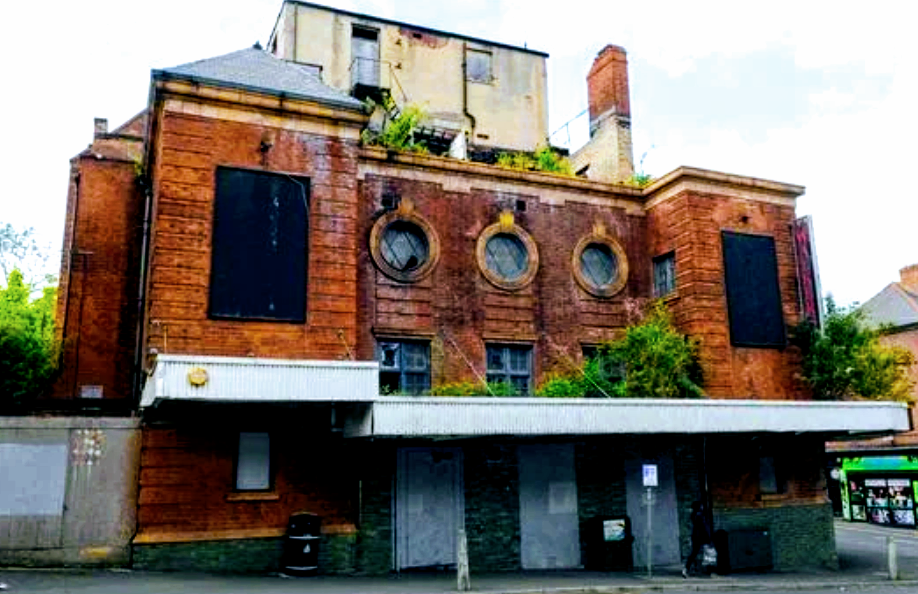
As I walked past the derelict performance venue, the Hippodrome, which was also previously a Bingo hall before an incident of fire. The “undesirables” lingered around the building , sitting outside the boarded up main entrance. A disused area which is consumed by the homeless and the unemployed, a social space that they could call their own. The surrounding areas around the Hippodrome makes me encounter the feeling of uneasiness and intimidation. As individuals deemed as ‘delinquents’ congregate this particular location. Two men shouted me for my attention, however, I proceeded to walk and avoid interaction. Heading towards the end of my urban walk, I walk back to the ruined, disused factory on Uttoxeter New Road. The walls covered with unappreciated arts which is often shunned at, as it is considered to be a type of vandalism. Moreover, the locals are utilising the old factory’s walls to accommodate their hobbies, Lefebvre (1968) explains that urban environments deliver pleasure to it’ residence and tourists. Creating a transformation to the tired, old building in a non-conventional approach. The premises of where the old factory is located provides an area for the deviant locals to meet and/ or hang around at. Which provides a sense of urban community amongst groups of people. Such unsupervised area invites delinquent actions such as substance abuse and graffiti.
 Derby Urban Sociology
Leave a comment